
Hall Tiles Design: How to Choose the Right Tiles
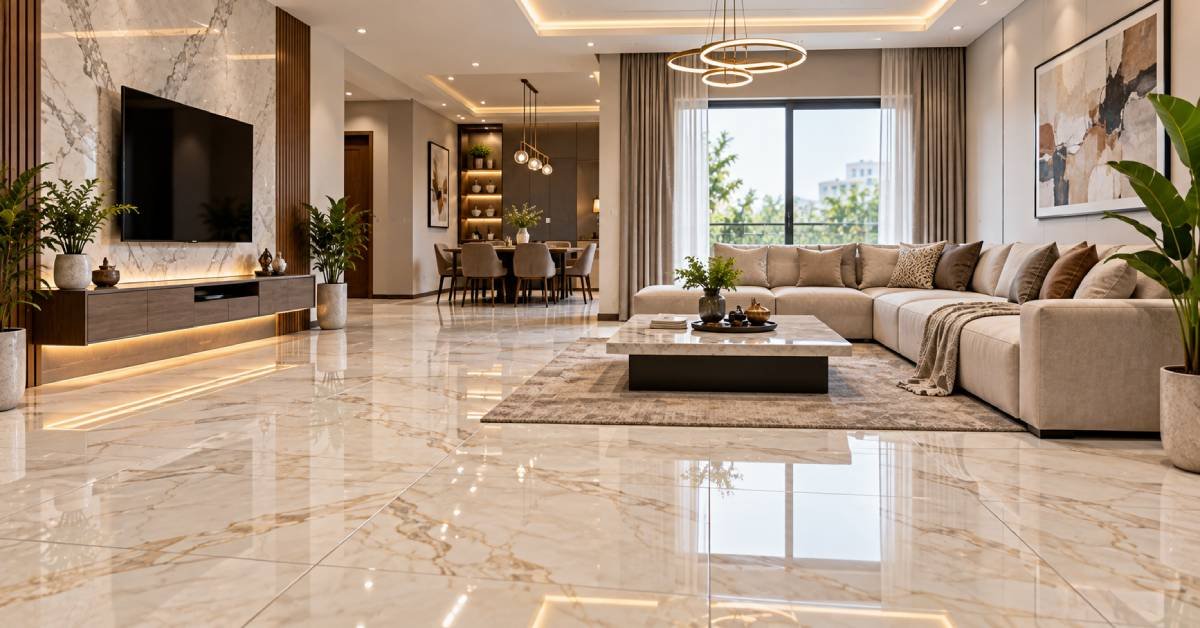
For most Indian homes, the current trends dictate that the best hall tiles design is a glazed vitrified tile (GVT) in a matte finish, 600×1200 mm, in a neutral mid-tone. Budget ₹120–₹280 per sq ft for the tile and another ₹40–₹110 per sq ft for laying. Go polished only if your hall has no direct outdoor exposure.
But that only covers most homes. The rest of this guide is for everyone else — and for anyone who wants to understand why, so they don't spend two lakhs on a floor tiles design for hall they regret.
At Tileprint, we’ve been helping people select tiles in Bangalore since 1993. Here are a few tips for choosing home tiles for hall and what things to watch out for after the purchase.
Five Questions to Ask Before You Buy
If you’re choosing your hall floor tiles design from a showroom sample or a Pinterest board, you’re setting yourself up for failure. A 2×2 tile held up at eye level tells you almost nothing about how 400 sq ft of it will behave underfoot. Five questions decide almost everything.
Does your hall open directly to the outside?
If the main door opens straight into the hall with no covered porch, water and grit will come in, especially June to September. You need matte or anti-skid — a polished tile here is genuinely dangerous when wet. This is the most expensive mistake. The only solution is to rip it all out.
How much natural light does it get?
North-facing halls and ground-level flats get very little sunlight. They need lighter tiles if there is no natural light. A gloss finish can bounce what little light there is. The South and West facing halls and flats with large windows can still incorporate darker textured tiles.
Do you have young kids, elderly parents, or pets at home?
This decides your finish more than anything else. A glossy white floor looks striking in a showroom and becomes a daily hazard and a daily cleaning job with a toddler crawling on it or a dog running in from outside. Matte, mid-tone, anti-skid tiles are the forgiving choice when the floor sees that kind of use.
How big is the hall, actually?
Measure it. If under 150 sq ft, large tiles would need to be cut and the seamless effect will be gone. If over 250 sq ft, small tiles will make the space look busy.
How long do you want this floor to last without touching it again?
A hall floor typically isn't redone for fifteen to twenty years. If you want to set the floor tiles hall and forget it, spend more upfront on full-body or double-charge vitrified construction — chips and scratches won't reveal a pale body underneath. If you're in a rental or expect to renovate again in five years, a cheaper GVT or ceramic tile is money better spent elsewhere.
What the Labels Actually Mean
Showrooms throw around terms like GVT, PGVT, DCV and full-body as if everyone knows them. The difference matters more than the pattern printed on top.
- Double-charge vitrified (DCV) presses two layers of pigment together, so the design runs a few millimetres deep. Chips and scratches don't reveal a pale body underneath — it's the quiet, durable choice for family halls, rental properties, and ground-floor entrances. ₹60–130 per sq ft.
- Glazed vitrified (GVT) has a digitally printed design under a protective glaze. This is where most of the marble-look and wood-look ranges live, and it's the sweet spot for design variety versus durability. ₹120–280 per sq ft.
- Polished GVT (PGVT) is the same tile with a polished surface — beautiful in a formal hall, unsafe anywhere near water.
- Full-body vitrified carries the same colour all the way through, so it shows nothing when it chips. Good for very heavy traffic. ₹90–250 per sq ft.
- Indian marble (Makrana, Rajnagar, Katni) handles daily Indian foot traffic better than Italian marble because it's harder and denser. ₹80–400 per sq ft depending on grade.
The one number worth remembering: vitrified tiles absorb under 0.5% water against 3–6% for ceramic. That's the entire reason vitrified lasts two to three times longer on a floor.
Getting the Size Right
Two homes can buy the identical marble-look tile in the same colour and end up with floors that look nothing alike, purely from format. Fewer grout lines mean fewer visual breaks — a large-format floor can make the same room read as 20–30% more spacious.
- 600×600 mm — the safe default. Widest design availability, easiest replacements years later, least cutting waste. Best under 180 sq ft.
- 600×1200 mm — the current favourite for Indian halls. Creates flow, especially in rectangular rooms. Tileprint carries a range of 600×1200 mm tiles in glossy, matte and wood-look finishes.
- 800×800 mm — good for square halls above 200 sq ft.
- 800×1600 mm and slabs — open-plan halls only, and only over a properly prepared subbase.
One constraint nobody mentions upfront: large design tiles for hall need a flat subbase. If the floor varies by more than about 3 mm over 2 metres, big tiles will eventually crack. Discuss the subbase with your contractor before you commit to 2x4 or bigger.
Hall Tiles Design Ideas That Hold Up in Real Homes
- Matte marble-look GVT in a warm neutral remains most reliable. You get the veined marble look without the worry of sealing or staining. Plus, matte cleverly conceals footprints. Don't go for stark white with dark veining in a narrow hall, as it will read busy, not elegant.
- Wood-finish porcelain planks provide the warmth of timber without fearing water. Pale Scandinavian greys look great in pictures but not in natural light. Oak and walnut tones are the way forward. Feel free to use a staggered or herringbone pattern but never a grid, or it breaks the wood illusion.
- Large-format neutrals in a small hall seem counterintuitive but work. Bigger tiles with the very narrow colour-matching grout make a small room appear bigger. Sketch the layout first if the room isn't a clean rectangle — forced cuts on three sides ruin the effect.
- Terrazzo-look tiles are back for the utility. The already speckled surface conceals dust and hairline scratches more than any unicolour floor. Keep wall tiles design for hall and furniture plain so the floor can lead.
- Anti-skid stone-look tiles — slate, travertine, sandstone in a matte or GHR finish — are the safe choice for any hall doubling as an entrance.
- Mid-tone greys and greiges fit the colour family for Indian conditions. White highlights even the tiniest speck of dust; charcoal highlights every footprint. Mid-tones hide both.
What Hall Tiles Design Actually Costs
Most pricing articles quote the tile and stop — that's roughly 60% of the real bill. Here's a 250 sq ft hall with mid-range GVT, worked through:
|
Item |
Cost |
|
Tile (275 sq ft bought, incl. 10% wastage) @ ₹160/sq ft |
₹44,000 |
|
Adhesive, grout, spacers |
₹6,250 |
|
Labour and laying |
₹17,500 |
|
Skirting |
₹4,500 |
|
Total |
₹72,250 |
|
Effective cost per sq ft |
₹289 |
The tile was ₹160. The floor was ₹289. That gap is where budgets usually break — it's also why we always quote an all-in figure rather than just a tile price, so there are no surprises once laying starts.
Buy 8–10% extra for a standard rectangular hall, 12–15% for layouts with angles or alcoves, and order everything from one production batch — shade varies between batches, sometimes visibly. Keep four or five spare tiles after installation; ranges get discontinued and repairs become impossible without them.
Five Mistakes That Cost the Most to Fix
- Polished tiles at an exposed entrance. The most common and most expensive error in Indian homes — a polished tile near an open door is genuinely slippery in monsoon.
- Choosing from a showroom sample only. Take a full tile home and look at it in your own light before committing.
- Large format over an unchecked subbase. Confirm flatness before you buy 2×4 or bigger.
- Ignoring long-term availability. Ask if the range is a continuing line, and keep spares regardless — it's a question we get asked often enough that we flag it to every customer upfront.
- Pure white in a family hall. Immaculate in the showroom, a full-time job at home.
FAQs
Which tile is best for a hall?
GVT in matte, 600×1200 mm, for most homes. DCV for heavier traffic. PGVT or Indian marble for premium halls with no water exposure.
What's the realistic price per sq ft?
Expect around ₹60–280, depending on the tile type and material, plus ₹40–110 for laying and materials. A mid-range hall floor typically lands at ₹200–300 per sq ft all-in.
Which should I pick: Glossy or matte?
Matte if there's any outdoor exposure, children, or elderly family members. Glossy only for interior, dry, dim halls.
Do wall and floor tiles need to match?
The wall tiles design for hall should coordinate, not match. Let one surface carry the pattern and keep the other plain — identical tiles on both flatten the room.
Which tile is long lasting?
Porcelain and vitrified tiles are the strongest, most long-lasting due to their dense material.
What size tile for hallway?
The standard size is 600 x 600 mm (2 x 2 feet); it is commonly used and works well most of the time.
The Short Version
A hall tiles design is a fifteen-to-twenty year decision and the largest uninterrupted surface in your home. Get the finish right for how the room is used, the size right for its dimensions, and the colour right for the light you have — design comes after those three, not before.
If you are in Bangalore, you can visit Tileprint to view tiles design for hall with price and compare finishes, sizes, colours and designs in real life before you buy. Screens can be misleading when it comes to colour, so there really is no substitute for seeing a full size tile in your own light.
Browse our tiles collection or get in touch for current pricing and availability.


