
A Room-by-Room Checklist for Buying Home Interior Materials
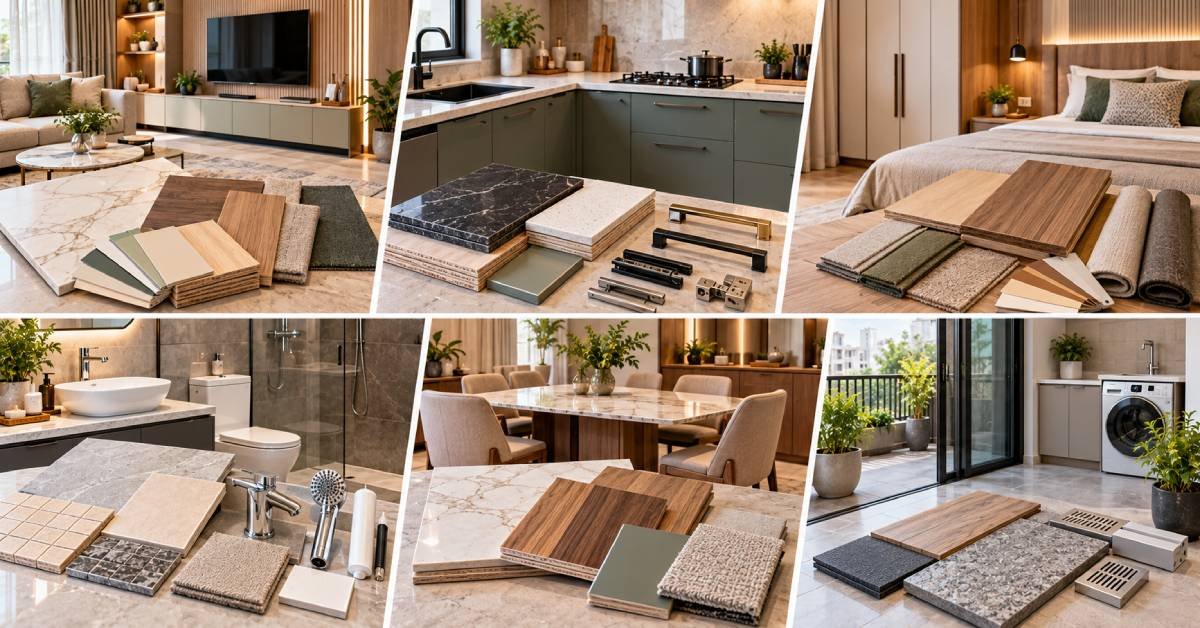
The right home interior materials beautify any space. Whether it's about flooring, furniture, cabinetry, or closet fittings, even the smallest choices matter. But interior design follows a ‘to each their own’ policy. Your kitchen’s hardware and the wardrobe finishes you love in the bedroom need to be installed as per the various requirements of each room respectively.
You can have a space that is both welcoming and functional with the proper home furnishing materials, without breaking your budget limits. The secret is to examine the needs of the room first. Use this home interior materials checklist as a guide to what to focus on, look for and buy.
An Overview of What to Buy for Each Room
Stroll around your house and take a good look at each and every room. You’ll notice they all have different needs. And depending on the room, you’ll need:
| Room | Materials to Buy | What to Prioritise |
|---|---|---|
| Living room | Flooring, wall finishes, plywood, laminates, ceiling materials | Durability, appearance and easy maintenance |
| Kitchen | Cabinet boards, laminates, countertops, tiles, hardware | Moisture resistance, heat tolerance and cleaning |
| Bedroom | Wardrobe boards, finishes, flooring, curtains and upholstery | Storage, comfort and durability |
| Bathroom | Floor and wall tiles, waterproofing, sanitaryware, faucets | Slip resistance, water protection and easy cleaning |
| Dining area | Table surfaces, chair upholstery, storage materials | Stain resistance and everyday usability |
| Balcony and utility | Outdoor flooring, weather-resistant finishes, storage materials | Weather exposure, drainage and corrosion resistance |
A Room-by-Room Home Interior Materials Checklist
A kitchen has different needs than a living room. You’d want your kitchen to stay clean, uncluttered and resistant to things like heat, stains, water, etc. On the other hand, your bedroom must be a warm, cosy place where you can relax.
Living Room
Select flooring for its durability to daily foot traffic, wall finishes that are easy to clean, and boards and laminates for TV units and cabinetry that are durable. Inspect the furniture construction prior to paying a premium for decorative finishes.
Items
- Vitrified tiles or suitable alternative flooring
- Wall paint
- Decorative panels
- Plywood or other boards for furniture
- Laminates
- Ceiling materials
- Upholstery
Kitchen
The kitchen is one of the hardest rooms in the house due to the heat, oil, water and cleaning process. Special emphasis is given to protecting against moisture around the sink and other water prone areas.
Items
- Cabinet Doors
- Cabinet Hardware (pulls, knobs)
- Hinges
- Drawer Glides
- Metal A-Frames
Bedroom
Bedrooms require materials that won't complicate simple everyday routines.
Home interior materials for the bedroom need to provide peace and comfort, good storage and a compatible look. They should be durable but, more importantly, comfortable, with good indoor air quality.
Items
- Wardrobe boards and finishes
- Bed materials
- Flooring
- Wall paint
- Curtains
- Rugs and upholstery
Bathroom
Materials in the bathroom have to withstand water and washing with harsh chemicals over and over again. If not installed correctly, any high-end product can be useless. Look for slip resistance, fitting size, maintenance and general compatibility.
Items
- Anti-skid floor tiles
- Wall tiles
- Waterproofing products
- Sanitaryware
- Faucets
- Grout
- Sealants
- Suitable storage materials
Dining Area
Areas where eating occurs are likely to be stained with food and have a high volume of traffic. The optimal samples will be attractive and durable.
Items
- Dining table materials
- Chair upholstery
- Storage boards
- Cabinet finishes
- Lighting fixtures
Balcony & Utility Area
Sun, rain, humidity and regular cleaning are common to balconies and utility spaces. Materials that are typically only meant for indoor application might not be ideal for these uses.
Items
- Outdoor-suitable tiles
- Exterior finishes
- Weather-appropriate storage
- Corrosion-resistant fittings
- Drainage components
When shopping for interior finishes for your home projects, we suggest you first ask yourself one question: What will this material require of it in this space? And the answer can be more informative than colour, trend or price.
How to Compare Interior Design Materials Before Buying
Once you’ve figured out which interior design materials you’re going to purchase, you can compare your options before actually paying.
| Buying Factor | What to Ask |
|---|---|
| Quality | What are the material grade, thickness and specifications? |
| Durability | How well will it withstand daily use? |
| Maintenance | Does it require special cleaning or regular polishing? |
| Installation | Are compatible adhesives, fittings or accessories required? |
| Total cost | What are the material, labour, wastage and finishing costs? |
| Warranty | What is covered, and what conditions apply? |
| Availability | Can the material arrive before installation is scheduled? |
Which Home Interior Materials Should You Spend More On?
A rough estimate of quantities will help you buy more economically. For flooring and wall tiles, calculate the surface area and allow additional for cuts and waste (something between 5-10%), making these allowances dependent on the size of the tiles and the pattern in which they are laid.
| Material or Application | Where to Prioritise Quality |
|---|---|
| Waterproofing | Bathrooms, balconies and other wet areas |
| Cabinet boards | Kitchen units and moisture-prone storage |
| Hardware | Frequently used drawers, shutters and wardrobes |
| Flooring | High-traffic areas and wet zones |
| Electrical materials | Certified products and safe installation |
| Decorative finishes | Choose according to appearance, maintenance and budget |
Pro tip: Confirm all measurements and layout prior to bulk ordering. Your contractor will be able to validate quantities for you and confirm if any other products are needed.
Common Mistakes to Avoid When Buying Home Renovation Materials
Use this home renovation materials guide as part of the ‘what NOT to do’ while shopping:
- Selection on looks alone: Investigate performance, specs and maintenance requirements before choosing a finish.
- Purchasing things at the last minute: Double check that you will get it when you need it.
- Not factoring in the cost of installation: A cheap material price doesn't necessarily guarantee a lower overall project price.
- Wrong amounts ordered: Remember to factor in wastage, breakage and pattern matching when calculating what is needed.
- Combining materials that do not match: Verify compatibility of the boards, adhesives, finishing materials and installation systems.
Besides the curtains and the rugs, the upholstery and all other finishing touches should also be a part of the budget.
Final Home Interior Materials Checklist Before Placing Your Order
- Room-wise material list prepared
- Budget allocated for each room
- Product specifications and grades verified
- Samples checked in the home's lighting
- Quantities and wastage allowance calculated
- Installation and finishing costs included
- Product availability and delivery dates confirmed
- Warranty terms and maintenance instructions reviewed
- Invoices and product details saved
FAQs
1. What are the most important home interior materials to buy?
Flooring, boards (ply or other), laminates, paints, wall coverings, fittings, tiles, sanitaryware and lighting are the most important home interior materials to buy.
2. How do I choose the right interior materials for my home?
Consider how the room is used, the exposure to moisture, maintenance required, budget, and life expectancy. Always balance the product specifications and sample testing prior to a purchasing decision.
3. Which materials are best for home renovation?
The best home renovation materials typically include vitrified tiles, good quality plywood, tough laminates, washable paints and sturdy hardware.
4. How can I reduce the cost of home interior materials?
Establish a budget and compare prices. Calculate the right quantities, and don't use extras that will need to be paid for as upgrades. Keep away from poor materials, which are difficult to replace later on.
5. When should I buy home furnishing materials?
Order significant home furnishing materials early, about 2–4 weeks before schedule, to ensure they are available and to allow installation planning.
Conclusion
Buying home interior materials can be simplified if you treat the rooms according to their individual requirements. Kitchens will need to be protected from moisture, bathrooms will need to be waterproofed to reduce slipping, and the living room needs to provide aesthetic appeal.
The best bet is to create materials before installing, select specifications (not simply prices), and buy quality where it will cost much to replace. It's not 'looks' that make up a great home. It's material choices that go the distance long after the renovation is complete.
Learn More: Where to Buy Tiles Online in Bangalore: A Complete Buyer's Guide


