
How to Choose Bathroom Tiles for Indian Homes
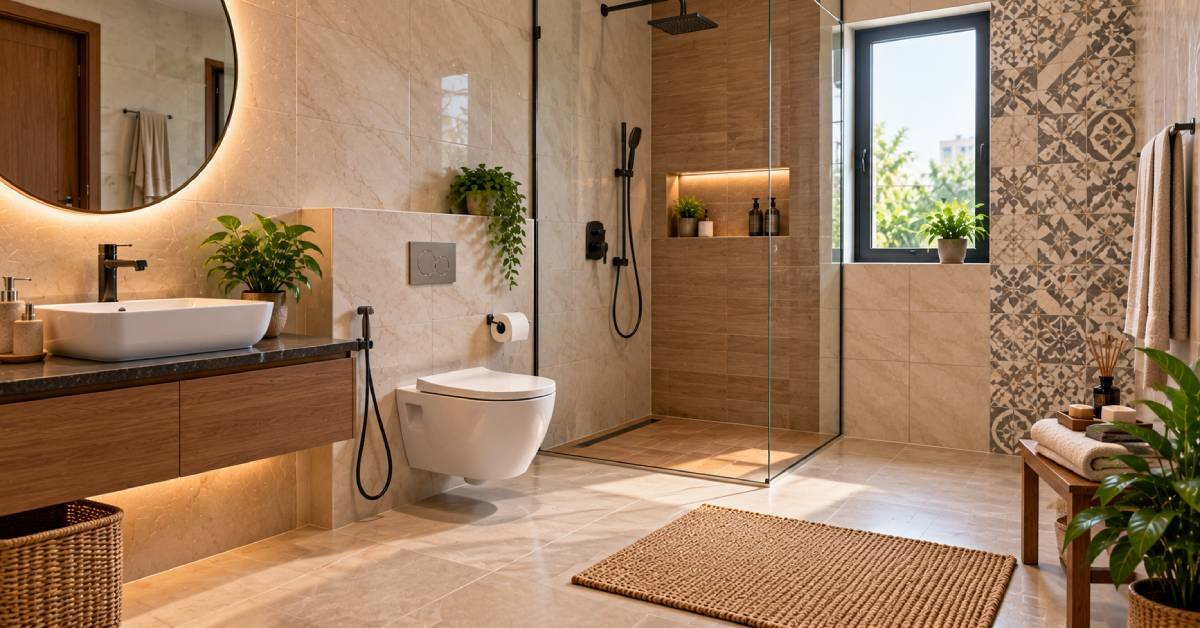
Learning how to choose bathroom tiles can help you when you are renovating. India's bathrooms experience high water usage, plenty of humidity, build-up of hard water deposits and high levels of daily usage
Much can go wrong without the best bathroom tiles for home: your bathroom traps moisture, the floor becomes too slippery, water spots begin to show, and the grout starts to look old and dingy.
The upshot being that bathroom tile selection isn't something to be done just because it's trendy, but because you want a bathroom for your home.
Here is the ultimate guide on how to select bathroom tiles that are practical as well as aesthetic.
How to Choose Bathroom Tiles — A Guide for Beginners
Everyone learning how to choose bathroom tiles should start by understanding:
1. Various Tile Sizes
Large-format tiles (60 × 120 cm and above)
Large tiles are the best tiles for bathroom to give the illusion of a bigger space. Their visual appeal lies in fewer and cleaner grout lines. But they work great for bigger bathrooms as well.
Medium tiles (30 × 60 cm)
The most common size in Indian bathrooms, and the easiest to lay and manage in most cases, suitable for floors and walls.
Small tiles (20 × 20 cm or smaller)
Very versatile. Can be used for shower floors, feature walls or to create the presence of pattern and visual interest.
Layout, plumbing, drains and fixtures all factor in.
2. Tile Material
Porcelain Tiles
Porcelain is the most common and ideal choice of bathroom tiles for Indian homes. They are dense, durable, and absorb very little water.
Ceramic Tiles
There are several advantages to going with ceramic tiles, including the fact that they are available in a very large variety of colours, patterns and finishes. They are especially popular on bathroom walls, where wear is different from that of the floors.
Vitrified Tiles
Vitrified tiles can also work, especially if durability and variety of finishes are key. But we would be careful about assuming that you are getting durable floors if the tiles are merely "vitrified". The finish on the surface and the slip resistance are just as critical.
3. Colour, Design, and Finish
Colour
White and light neutral tiles are perfect when a high-end, crisp look is what you're after. And in bathrooms, they can transform them from dark and dingy to open and welcoming – especially if you're not blessed with a lot of natural light.
But all-white bathrooms can be a nightmare to keep looking good with water stains, soap stains, and evidence of water deposits exposed every time you get out of the shower.
If a darker-toned bathroom is more your thing, you could always opt for a pattern or a warmer toned grey/ beige/ stone look to hide the evidence of life.
Our Tip: Neutrals offer the most longevity in colour. You won't get bored of them (unlike that bright red wall in the house you bought 2 years ago) or regret going lighter.
Design
Tiles come in many designs and patterns that look like:
- Natural stone or Granite
- Marble
- Wood
- Herringbone
- Checkerboard
- Geometric shapes
And many more, alongside plain solid colours.
Finish
The matte vs glossy tile debate continues as style trends change. Usually, matte tiles are the more practical choice.
But glossy tiles do have their perks. They are the best tiles for bathroom for reflecting so much light and making the space look bigger and brighter.
As a friendly suggestion, keep the glossy ones limited to walls.
4. Safety Measures
Glossy tiles can be dangerous in bathroom wet areas. It's likely that in the morning rush you've got one or more of the family members dragging their way across a wet floor. That's how accidents happen.
To prevent this, get anti-skid, matt or textured tiles. Their texture is designed to provide grip and resist slipping.
5. Cleaning and Maintenance
Nobody wants to dedicate all of their weekends to cleaning bathroom tiles. The best bathroom tiles for your home should be resistant to soap, stains or water residues. Very textured tiles will give you grip but they are also harder to keep clean.
The grout is important as well.
A lovely tile will look messy if the grout is stained or not easy to keep clean. For a busy family, a less complicated surface and a reasonable choice of grout is likely to be a better option than complicated mosaics.
Match the Tiles With Your Sanitaryware
Before you commit, take a moment to see the whole bathroom at once:
- Wash basin
- WC
- Shower fittings
- Vanity
- Mirror
- Lighting
- Storage
- Hardware finishes
If you've opted for a minimal modern theme with your sanitaryware, the simple stone-look or large format tile works really well. But for more traditional fixtures, warmer tones and traditional patterns work better. Your bathroom should be integrated, not pieced together.
Common Bathroom Tile Mistakes to Avoid
Knowing what not to do makes selecting bathroom tiles very simple:
- Buying tiles for the floor solely because they look fashionable
- Fitting a tile without testing it in the bathroom with your lighting
- Using lots of busy patterns in a small bathroom
- Overlooking the effect of grout colour and its cleaning requirements
- Selecting the wrong size of tile without considering drainage and slopes
- Believing that costly tiles will work better
- Putting off purchasing additional tiles for future repairs
A Simple Checklist for How to Choose Bathroom Tiles
Before you buy, ask:
For the floor:
- Is it slip-resistant?
- Is it durable?
- Will it remain practical when wet?
For the walls:
- Is it water-resistant?
- Is it easy to clean?
- Does the finish work with the lighting?
For the overall design:
-
Does it complement the sanitaryware?
-
Will you still like the colour in a few years?
For maintenance:
-
Will the surface and grout be easy to keep clean?
If you answer ‘yes’ to most of these questions, chances are you’ll find the right tiles.
FAQs
Q1. Which tile material is best for Indian bathrooms?
Overall, Porcelain is the strongest material. So choose that if durability is your goal. Ceramic or Anti-skid tiles are popular too.
Q2. How do I choose the right bathroom tiles for my bathroom?
The most important area is probably the floor. Choose tiles based on the area first. Material, colour, design, etc., are secondary.
Q3. Which tile is best for a bathroom, glossy or matte?
You can choose either. Matte for floors and glossy for walls is the best way.
Q4. What are the latest trends in bathroom tiles?
Currently, the trend is to use large format, textured tiles with neutral colours.
Q5. Which tile size is best for a bathroom?
Generally, medium sized tiles (30 × 60 cm) are used in India. Choose based on your bathroom size.
Conclusion
Now that you know how to choose bathroom tiles, how do you plan on beginning? Will you be going for function first or practicality?
It's not about choosing the priciest tile, the latest trend, or the one that shines under shop lights. It's about looking ahead five years from now. Will you still be happy running your hand over the floor? Will you be able to keep the walls clean? Will the colours still work?
That's the ultimate test of your taste and knowledge. But the results are totally worth it. Your bathroom will not only look great, but you won’t be left with any regrets.
Learn More: Complete Guide to Choosing the Right Sanitary Showroom in Bangalore


