
How to Choose the Right Sink Faucet for Your Bathroom
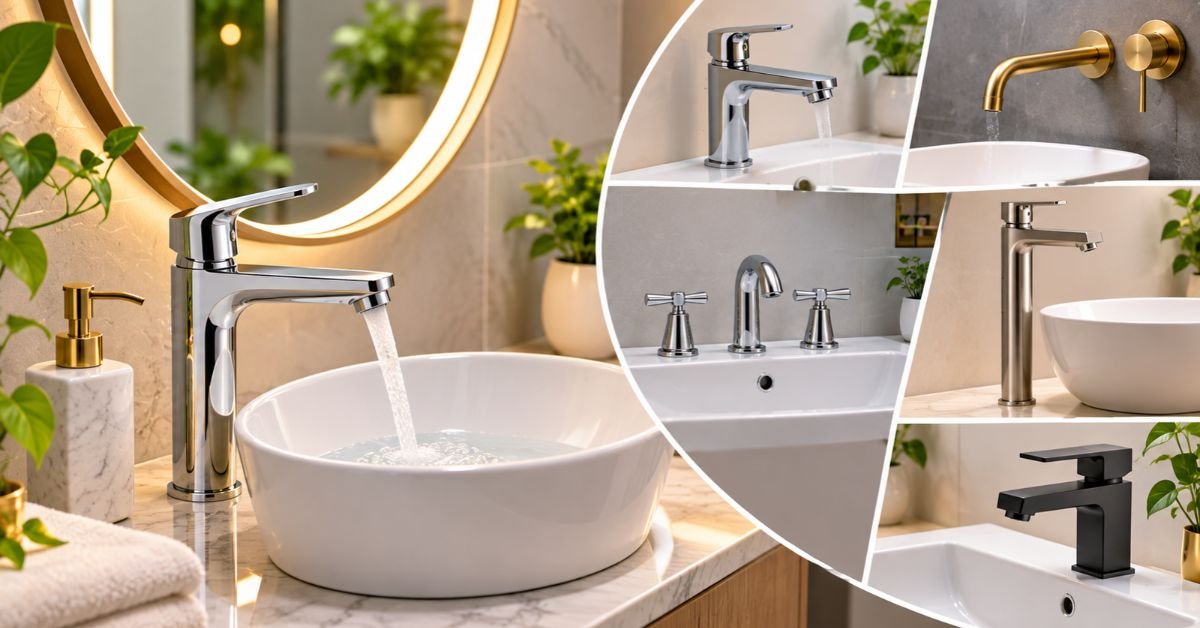
It is vital to select an appropriate tap for your bathroom. People frequently use bathroom taps and so it is important that it is easy to use and functions effectively. There are a variety of styles and there are differing installation, material and aesthetic considerations to consider when deciding on the best tap for you.
Whilst you may be building or renovating your bathroom, you will need to think about how the tap interacts with the style and function of your sink, alongside other factors such as sink size, water pressure and ease of maintenance.
Below, we discuss the various types of taps and key considerations to bear in mind when buying a tap.
What Is a Sink Faucet?
A sink tap is a fitting which is either attached to or above a sink. It regulates both the temperature and volume of water and can be used for numerous tasks such as hand, face and tooth cleaning.
Single-lever, pillar, wall and tall basin taps are all available. As their names suggest, each tap is suited to certain sinks and to varying bathroom setups.
Modern taps also benefit from enhanced temperature and volume regulation features and aesthetically pleasing designs which typically fit well within modern bathroom settings.
Different Types of Bathroom Sink Faucets
It is important to recognise the different tap styles so that you can determine which would be most appropriate for you, based on sink style, installation needs and personal preference.
1. Single-Handle Basin Faucets
This tap enables both temperature and volume to be regulated by moving a single lever. Temperature is altered by moving the lever in different directions and volume by raising and lowering it.
Single-lever taps are a good fit for modern bathrooms. In addition to being visually pleasing, they are easy to use and take up less room.
Best for: Modern bathrooms. Small sinks. Domestic settings.
2. Wall-Mounted Sink Faucets
Rather than attaching to a sink or countertop, a wall-mounted sink tap is affixed to the wall above a sink.
This installation method results in a sleek bathroom style as there are no fittings visible on the countertop. Wall-mounted taps are particularly suitable for countertop sinks and modern bathrooms.
Correct internal plumbing must be in place to facilitate wall-mounted tap installation. Thought must also be given to the height and reach of the tap so that water does not splash onto the countertop.
Best for: countertop sinks. Sleek bathrooms. Modern vanity units.
3. Deck-Mounted Basin Faucets
Deck-mounted taps are fitted to a sink or countertop. They are a commonly available type of tap and are available in various sizes, styles and shapes.
Generally, deck-mounted faucets are simpler to install and maintain in comparison to wall-mounted faucets. However, it is important to verify the number of holes in your sink to ensure that you can fit the required tap.
Best for: Normal sinks. Sinks which already have pipe fittings.
4. Tall Basin Faucets
Tall basin taps are well suited to countertop sinks, and in particular, vessel sinks which are mounted on top of a vanity unit.
The increased height of the tap ensures an appropriate gap exists between the tap and the sink. This facilitates ease of hand cleaning and also produces a well proportioned aesthetic.
Ensure that your chosen tap has suitable height and reach so that water is delivered towards the middle of your sink.
Best for: Countertop sinks. Stylish vanity units.
5. Two-Handle Basin Faucets
With two levers, hot and cold water can be individually regulated to produce the desired temperature.
Such taps can be produced in both traditional and modern styles and are a good choice for people who wish to separately regulate hot and cold water.
Best for: Traditional bathrooms. Sinks requiring separate hot and cold water control.
How to Choose the Right Sink Faucet for Your Bathroom
As well as visual appeal, there are further key factors to analyse in order to decide on a suitable tap.
1. Sink Style
It is first necessary to establish what sort of sink you possess. Not all taps will fit all sinks.
Typically, a countertop vessel sink will require either a tall tap or a correctly sized wall mounted tap. Usually, a normal under-counter sink is well suited to a standard deck-mounted tap.
It is also important to assess the number of holes in your sink as some taps require just one hole, whereas others need individual holes for the tap and for the levers.
Ensuring that your tap is compatible with your sink will minimise installation issues and the need for alterations.
2. Tap Material
As well as influencing the tap’s aesthetics, the material is also crucial in determining its longevity and resistance to corrosion.
Popular tap materials include:
- Brass – Brass is widely used and is both robust and resistant to corrosion. It is a good material for bathroom taps.
- Stainless Steel – Stainless steel taps have a modern aesthetic. They are also effective at resisting rust and corrosion and are relatively easy to clean.
- Zinc Alloy – Whilst zinc alloy taps are often more cheaply available, their longevity will depend on the quality of manufacture and the material’s surface protection.
Always investigate what material the body of a tap is made from, not just the exterior.
3. Tap Finish
As well as the material, the tap’s finish is also integral to the bathroom’s overall appearance. It should harmonise with the sink and other bathroom items.
Popular finishes include:
- Chrome – This classic glossy finish is generally well-suited to a variety of bathroom settings.
- Matt Black – Providing a striking effect, this is a good fit for modern bathrooms.
- Brushed Nickel – Giving a muted shiny effect, this is a good match for neutral bathroom décor.
- Gold – This adds an ornamental, opulent feel to a bathroom setting.
Consider how easy a particular finish is to clean and its resistance to scratches, staining and corrosion. Always adhere to the manufacturer’s guidelines in relation to cleaning.
4. Water Pressure
Water pressure is another key consideration.
Should the water pressure within your home not conform with the water pressure for which a tap is designed, then it may not function as efficiently.
For instance, some mixer taps need both hot and cold water to be supplied at sufficient pressure. Should your bathroom receive water from an overhead tank (which tends to produce water at relatively low pressure), then confirm that your chosen tap is appropriate for such a situation.
Opting for a tap which is compatible with your home’s water pressure promotes uniform water flow and is also convenient.
5. Sprout Height and Reach
Tap height and reach are significant in preventing water from splashing.
Should a tap’s reach be insufficient then hand cleansing may become uncomfortable. Likewise, if a tap is too high or is incorrectly placed, water may splash down onto the countertop.
Below are the key measurements to analyse:
- Height – The vertical distance from the base of the tap to its water outlet.
- Reach – How far across the sink the tap’s water outlet extends.
- Depth – The distance from the sink edge to its base.
Unlike kitchen sink faucets, in the bathroom ideally water should be directed towards the central area of a sink to allow for easy hand cleansing.
6. Tap Cartridge
Within a mixer tap, the cartridge is used to control water flow and temperature.
Generally, ceramic disc cartridges are employed within modern taps. Provided that they are well-manufactured and maintained, they operate easily and can also assist in minimising leaks.
Investigate the quality, warranty and availability of spare cartridges prior to making a purchase.
Good quality internal workings are fundamental. Despite looking visually appealing, a tap can become both inconvenient and ineffective if its lever becomes unresponsive or if it leaks.
7. Water Saving Benefits
Water conservation is a further point which can be relevant in deciding upon a tap, particularly for those aiming to limit non-essential water usage.
Some taps are fitted with aerators. These devices introduce air to the water stream. Depending on a tap’s design and the water pressure, this can both enhance user experience and aid water conservation.
Furthermore, there are also taps which utilise motion sensing technology. These activate in response to movement and cease dispensing water automatically once hands are removed.
Such benefits can add to user convenience and also promote water conservation.
Bathroom Sink Faucet vs Kitchen Faucet: What Is the Difference?
Although bathroom and kitchen taps can resemble each other, they differ in their functionality.
Whereas bathroom sink taps are mainly utilised for personal cleansing tasks (such as hand, facial and teeth cleaning), kitchen faucet tap are designed for food related activities, for instance, washing fruit and vegetables, dish cleansing and pouring liquids.
Key distinctions between bathroom and kitchen taps are shown below:
| Feature | Bathroom Sink Faucet | Kitchen Faucet |
|---|---|---|
| Main purpose | Personal hygiene | Food preparation and cleaning |
| Spout design | Usually compact | Often taller or longer |
| Water reach | Designed for wash basins | Designed for kitchen sinks |
| Common styles | Basin mixers and pillar taps | Pull-out, pull-down and mixer taps |
| Installation | Basin or bathroom wall | Kitchen sink or countertop |
Kitchen, kitchen sink and kitchen mixer tap are all designed just for kitchen use.
But bathroom sink tap should be selected depending on the size of your sink and also how much and what type of water it receives.
Tips to Maintain Your Sink Faucet
You can prolong the life and improve the efficiency of your tap by looking after it.
Below are some simple pointers:
Cleaning
- Regularly clean your tap using soap and a soft cloth. This will remove dust, soap scum and lime scale.
- Strong/abrasive products
- Avoid strong and/or abrasive products as these may damage your tap.
Leakage
- Investigate your tap for leakage around the spout, lever and connections.
- Deposited minerals
- Use suitable cleaning techniques to remove any minerals stuck there.
Aerator
- Should grime be affecting the flow of water then the aerator must be removed and cleaned.
Connections
- Investigate your pipes to confirm that all connections are secure and that no leakage is occurring.
- Correct care and maintenance together with repair will all assist in ensuring good longevity for your bathroom fittings.
Common Mistakes to Avoid When Buying a Bathroom Sink Faucet
The correct tap can be found to suit your requirements.
Carry out research and try and avoid the following errors;
Style before functionality
- Even if a tap is stylish, you should also think about its size and function.
Non compatible
- Investigate your basin and its connection points. You may need to undertake further installation work.
Water pressure
- Investigate the water pressure in your house to confirm that this is suitable for your new tap.
Spout Height and Reach
- Consider both the height and reach of a tap to prevent the need for continual water mopping.
Poor quality
- Investigate the main components of the tap (body and cartridge) and the surface to confirm that you are buying good quality goods.
No guarantee
- Confirm that the tap comes with a guarantee and that replacement parts are available.
If you take all of the above into account, then you will be able to purchase a bathroom tap that is suitable for you in terms of style, function and longevity.
Frequently Asked Questions
1. What is the best type of sink faucet for my bathroom?
Single lever basin taps are often a good solution for modern bathrooms. Tall taps are also a good choice for countertop vessel sinks. Your bathroom sink style, water pressure and general bathroom configuration will all affect which tap is most suitable.
2. What is the difference between a sink tap and a sink faucet?
They mean the same thing only ‘tap’ is more commonly used in British and Indian English. Conversely, ‘faucet’ is widely used in American English.
3. What is the best material for bathroom sink faucets?
Brass and stainless steel are both favoured as they are durable and resistant to rust. Nevertheless, the quality of the material will also depend on how the tap is manufactured and its cartridge and design.
4. Are wall-mounted faucets better than deck-mounted faucets?
Wall mounted taps offer a good aesthetic and additionally allow more space on the countertop. Deck mounted taps are usually easier to both install and replace. It is not always the case that one is better than the other.
5. Is it possible to use a kitchen faucet in my bathroom?
No, kitchen taps are designed for deeper basins. The decontamination requirements in a kitchen differ to those in a bathroom. The height and reach of a kitchen tap may not be ideal for a bathroom sink as well.
6. How do I prevent my sink faucet from causing water to spray?
Make sure that your tap is at the correct height and reach. Ideally, water should be directed to the central area of your sink from your tap.
7. How often should I clean my bathroom faucet?
It is recommended that you regularly clean your tap using a soft cloth and mild soap. Good tap maintenance can help to prevent scurf buildup and maintain the tap’s design.
Final Thoughts
To get a good faucet for your sink, there are four key factors to consider: appearance, functionality, durability and ease of installation. Before you purchase a faucet, it’s worth noting the style of your washbasin, faucet dimensions, construction material, water pressure, and finish.
A good faucet will complement the overall look of your bathroom, provide good functionality and ease of use, and not need a high level of maintenance.
Having thought these things through, you can go on to select a good everyday bathroom faucet to fulfil your needs.
Learn More: Top Kitchen Sink Models for Modular Kitchens: Designs, Materials & Prices


