
How to Clean Tiles and Grout Naturally: Easy Home Cleaning Tips
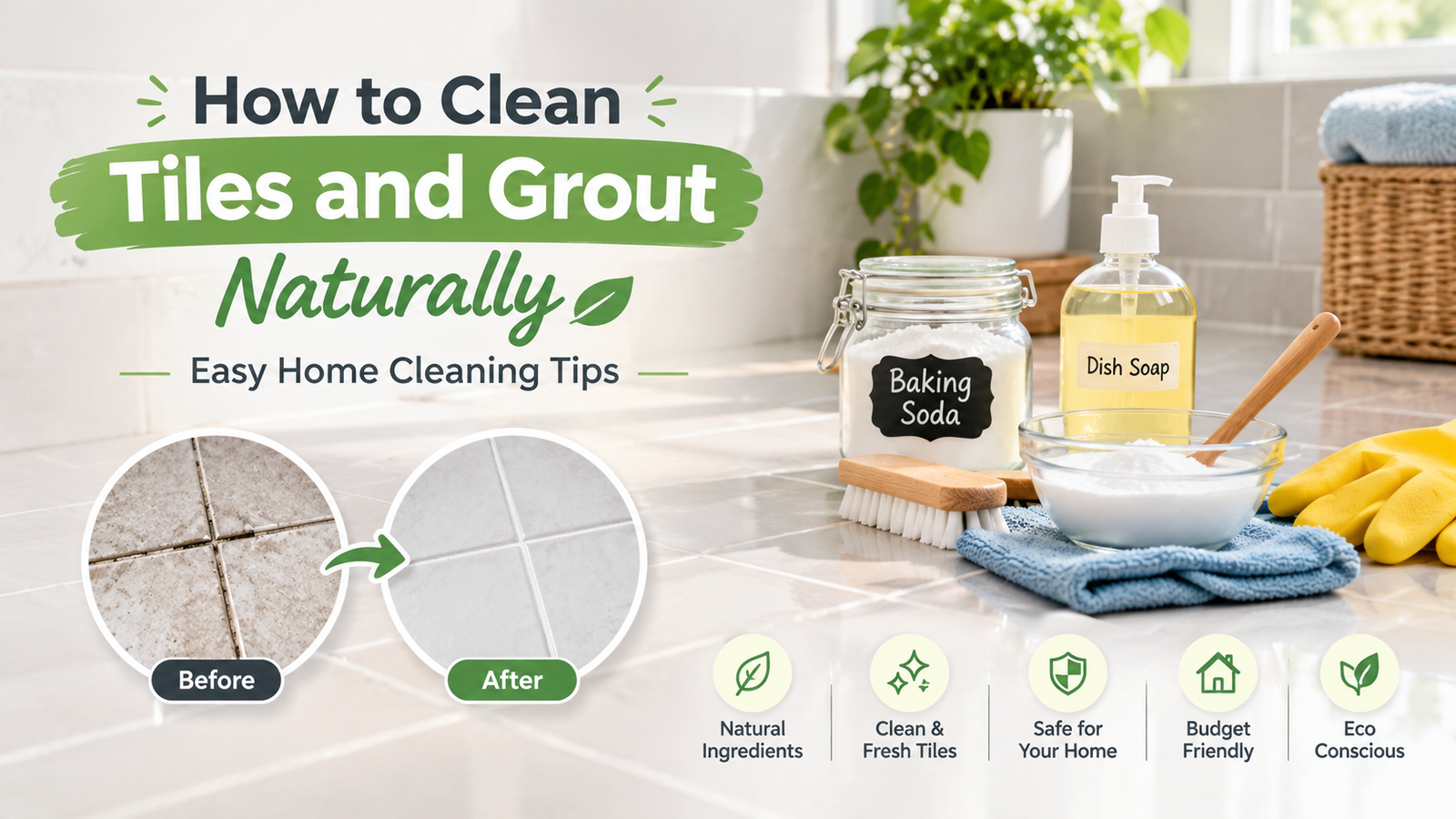
Tiles are a very common choice for modern homes due to their practicality and variety in colours and finishes. Dirt and grime can build up, even in tiles that look clean. A major culprit is the grout between tiles. The good news is you don’t need a bunch of store bought cleaning products. Many stains can be easily removed with a mix of everyday products like baking soda and soap, with warm water.
Different parts of the house face different cleaning challenges. For example, soap scum and water stains appear in bathroom tiles, and grease, food and dust in kitchen tiles. Grout that appears dirty and poorly cared for makes an entire floor look that way.
Here is how to clean tiles and grout with the right ingredients to make your tile cleaning tasks easier and keep your flooring safe.
Why Do Tiles and Grout Become Dirty?
Prior to teaching yourself how to clean tiles at home, it is useful to recognise why they may become dirty. Whilst the surface of tiles is usually flat and non-porous, the grout is often more porous. Consequently, it can become damp and dirty.
Various factors can cause tiles and grout to become unclean. These include:
- Dust – People continually track in dust, mud and fine dirt which then settles on floors.
- Soap scum – Soap and body care product can build up on bathroom walls and floors.
- Hard water – Water can contain minerals which can form white stains and deposits on bathroom tiles.
- Grease – Spilt oil and food can cause kitchen tiles to become greasy and challenging to clean.
- Humidity – Dampness (both from inadequate airflow and from water) can promote the development of mould and mildew.
- Poor housekeeping – Over time, dirt can become ingrained within grout and then becomes more difficult to clean away.
Proper housekeeping can avoid these issues becoming hard to handle.
What Natural Ingredients Can You Use to Clean Tiles and Grout?
For simple tile cleanings, you will be able to use some of the many common household products. In order to determine the best tile cleaning product, you must know what kind of stain you are working with.
Some helpful options include the following:
1. Baking Soda
Baking soda is a mild abrasive that can be used to clean surface dirt and stains when mixed with water to make a paste.
It is great for cleaning out lines of cement-based grout and removing some tough marks.
How to apply:
- Mix the baking soda with a little bit of water.
- Make a thick paste.
- Apply it gently to the dirty grout.
- Scrub using a soft nylon brush.
- Rinse thoroughly with clean water.
No harsh scrubbing – avoid scrubbing on polished or sensitive surfaces.
2. Mild Dish Soap
Average dish soap that can cut through grease, food and surface grime on a daily basis.
Especially great for kitchen tiles, you can use this regularly on the floors as part of your cleaning schedule.
How to use:
- Pour a small amount of mild dish soap into a bucket of warm water.
- Mix gently.
- Use a microfiber mop or a soft cloth.
- Wipe the tile surface.
- If any residue is left, rinse with clean water.
Avoid using too much soap; it can create a sticky film on the surface.
3. Warm Water
Hot water is good at effectively removing surface soil.
In conjunction with a clean microfibre cloth, it is highly effective for washing tiles.
Warmth can also be utilised to help dislodge surface dirt for further cleaning.
However avoid using scalding water on substrates and grouting which could be affected by high temperatures.
4. Hydrogen Peroxide (For Appropriate Grout Stains)
Hydrogen peroxide can effectively be used to clean stubborn organic soils off suitable tiles and grout. Again not all tiles, grouts and sealants can be treated with hydrogen peroxide.
Always check the guidance on the product, carry out an initial trial application on a discreet area and adhere to the instructions given. Do not combine it with vinegar, bleach and other cleaning agents.
A less aggressive alternative for general tile and grout cleaning can be created by combining baking soda and water.
Note: Although a product may be classed as natural, this does not automatically guarantee that it is safe for all of your tiling. Avoid using acidic substances including vinegar and lemon juice on marble, limestone, travertine and other acid reactive stone.
How to Clean Tiles and Grout Naturally: Step-by-Step Guide
Tiles and grout can often require cleaning as there are many ways in which they can become soiled.
How to clean and polish your tiles:
Step #1. Remove Loose Dust and Dirt
Sweep or vacuum your tiled floor.
Clear debris including sand, hair and dust off the tiles ready for cleaning with liquid. As some tiles are easily scratched, it is best not to drag debris across them whilst mopping.
Ensure that you thoroughly clean:
- Corners
- Edges
- Grout lines (commonly dirty)
Utilise either a soft bristled broom or a hard floor vacuum.
Step #2. Prepare a Mild Cleaning Solution
For regular cleaning, create a liquid from warm water and a couple of drops of mild washing up liquid.
Pour this liquid into a clean bucket.
Never mix vinegar, lemon juice and/or various cleaning liquids together as this is not always more effective and can even be detrimental to some surfaces.
When cleaning natural stone tiles, employ a pH-neutral natural stone cleaner.
Step #3. Mop the Tile Surface
Soak a microfibre mop in the cleaning liquid and then wring it out.
Begin cleaning from one wall of the room and progress towards the door.
Carefully polish the tiles to eliminate dust, oil and staining.
Ensure that there is no pooling of liquid, especially on grout lines.
On particularly dirty tiles, let the correct cleaning liquid act on the tiles as instructed and then carefully wipe this off.
Step #4. Clean the Grout Lines
Grout frequently darkens as it can become contaminated with grime, water and other substances.
To clean cement-based grout, form a baking soda based paste.
Carry out the following actions:
- Apply the baking soda paste to the grout.
- Let the paste sit on the grout for around 5-10 minutes.
- Lightly brush the grout using a soft nylon grout brush.
- Refrain from brushing with a metal brush or coarse pad.
- Use a wet microfibre cloth to wipe off the dislodged grime.
- Thoroughly rinse with clean water.
Should the grout continue to appear stained, it may need to be treated with a suitable specialist grout cleaner or should be professionally cleaned.
Step #5. Rinse the Tiles Properly
After cleaning, ensure that all traces of liquid and grime are eliminated from tiles.
Again utilise either a clean mop or microfibre cloth. However, this time, use fresh water.
It is key to adequately rinse tiles as soap and baking soda can cause them to lack lustre and/or produce a residue.
Step #6. Dry the Surface
Use a clean, dry microfibre cloth to dry the floor.
Only walk on the floor once it is fully dry.
Appropriate drying also helps to avoid scum formation and limits the moisture within grout lines.
How to Clean Bathroom Tiles Naturally
Bathroom tiles are often contaminated by water, personal care products, shampoo and soap, which over a period of time can accumulate on the surface creating a build-up of residue.
Method for how to clean bathroom tiles without using cleaning products.
- Wet microfiber cloth to wipe tiles of dust and loose dirt.
- Put warm water with a small amount of mild dish soap.
- Use soft cloth or microfiber to wet the surface.
- If using a cement-based grout that is compatible, apply a paste of baking soda and water and scrub softly with a brush.
- Wash out all traces of the cleaning products with clean water.
- Use a dry cloth to wipe the surface dry to eliminate water marks.
Use a squeegee to clear soap scum and moisture from the shower walls after bathing.
In the case of black patches or you see mould forming regularly, you need to locate and fix the cause of the moisture. Simply cleaning the surface may not help if the mould is growing behind the grout or sealant.
How to Clean Floor Tiles at Home
Flooring wears more quickly than walls because it is walked on more. In addition to regular use, flooring also gets less attractive when dust and dirt, and even food, are left on it.
Cleaning instructions for different materials also differ.
Ceramic Floor Tiles
Common in kitchens, bathrooms, and living rooms.
To clean ceramic flooring:
- Vacuum or sweep.
- Mix hot water with a little dish soap.
- Using a microfibre cloth, wipe the floor.
- If there are marks, clean them with a soft sponge.
- Rinse everything with a lot of clean water.
- Let it dry.
Hard scourers will damage the finish. Don’t use them.
Porcelain Floor Tiles
A very compact material that also typically has high resistance to water ingress. As such, it is an appropriate material to be used as flooring in high traffic areas.
To clean porcelain flooring:
- Brush off loose dirt.
- Apply hot water and an appropriate mild cleaning product.
- Wipe the floor with a microfibre cloth.
- If necessary, rinse.
- Dry with a clean cloth.
Steer clear of inappropriate acidic or abrasive products – especially for shiny flooring.
Natural Stone Floor Tiles
Comprising of marble, granite, travertine and limestone, natural stone flooring needs special attention.
Each type of natural stone has unique characteristics and hence specific cleaning needs.
Cleaning natural stone flooring involves:
- Brushing or wiping with a soft brush or microfibre dust mop to remove dust.
- Employ a pH neutral natural stone appropriate cleaning product.
- Do not utilise vinegar, lemon juice or acidic products for cleaning.
- Preclude abrasive brushes and strong chemical products.
- Subsequently, wipe the floor using a clean, wet cloth.
- Once cleaned, dry the floor.
Always consult the stone flooring manufacturer’s guidelines for care.
Tile Deep Cleaning: How to Remove Stubborn Dirt and Grime
Mopping the tiles every day should be enough for regular maintenance. When the dirt, grease and stains settle down deep into the surface or grout lines you should do the tile deep cleaning.
With a deeper cleaning, you're using more cleaning solution.
Follow these recommendations:
- Determine the cause of the stain: Ask yourself if it's grease, soap scum, mineral deposits, mould or dirt.
- Choose the right cleaner: Identify the correct cleaner according to the kind of tile you have and the stains.
- Use the cleaner: Use the recommended dilution and allow to soak for the period of time specified by the manufacturer.
- Tough on the cleaning: Take care to brush gently, choosing a soft nylon brush for grout and a non-abrasive sponge for tiles.
- Remove residue: Wash with clean water to remove all the material.
- Examine the grout: see if the stains are gone or if they are still present.
A professional-grade tile cleaner might be better than the ingredients found in home improvement stores for thick grease and stains that are caught deep down.
Certain stains like limescale, permanent discolouration and grout damage can sometimes not be removed even with natural cleaning.
In these cases, a specialist product or a tile-care expert is the route you want to take.
How to Use Tile Cleaner Without Damaging Your Tiles
The natural cleaning techniques work well for quick cleaning tasks, but in some cases when cleaning, there is a need for something more powerful.
Learning how to apply tile cleaners properly prevents any risks of damage or residues.
How to use tile cleaner:
- Check what’s it made of: natural stone, porcelain, ceramic or anything else.
- Read directions on the package, make sure that it is suitable for use with your grout and tile.
- Mix cleaning products as per directions. Concentrated solutions should be diluted, as required on the package.
- Do a spot test. Clean a small, or unimportant area first.
- Leave the cleaning product for as long as recommended. It shouldn't be left longer than instructed.
- Scrub it. Apply a scrubbing motion, do not exceed the contact time.
- If indicated by the manufacturer, use the rinse method recommended.
- Dry the surface completely using a soft towel.
No matter what cleaning products you use either store bought, or homemade never mix in bleach, vinegar, or ammonia.
Or else, the result damage surface of tile and grout sealers.
Common Tile Cleaning Mistakes to Avoid
Be sure to avoid these mistakes when tiling:
1. Constant use of Vinegar
Vinegar is acidic in nature which makes it corrosive to most marbles, limestone and travertines. Also acids can harm the grout because of their reactive nature with any chemically reactive liquids.
2. Metal Scrubbers
Polished or glossed tiles will be scratched easily by any metal brushes and aggressive scrubbers. It is recommended to use a brush or a sponge with soft bristles instead.
3. Excessive Usage of Soap
Soap, or any detergent leaves sticky layer that attracts dirt on tile.
4. Not Cleaning the Grout Joints
When you rinse your tiles do not clean only their surface but clean the dirt from their grout joints as well. Thus you will keep both the surfaces of your stones free from dirt.
5. Not Drying the Floor
There might be water leakage from your floor, especially from the grout joints and corners of your bathroom.
6. Using a Mixture of Cleaning Agents
Bleach and things like vinegar, ammonia, or other cleaning products will form a dangerous solution.
How to Keep Tiles and Grout Clean for Longer
There is no need for intensive scrubbing of tile surfaces if a consistent maintenance schedule is followed.
Some examples include:
Tile floors should be swept or vacuumed often.
Mop as needed for high foot traffic areas.
Immediately wipe spills from your kitchen tiles.
Clean the bathroom surfaces regularly.
After a shower, squeegee the water off the shower wall.
Proper bathroom ventilation helps keep the area dry.
Doormats placed at the entrances will keep some of the outside dirt from entering.
You should periodically scrub the grout.
Inspect grout for any cracks, damaged seals or other areas needing attention.
For grout that has become porous or natural stone, the manufacturer should recommend resealing.
Following these tips will keep your tile surfaces clean.
Frequently Asked Questions
1. How to clean tiles and grout naturally?
If you have tile surfaces that aren’t delicate, then you can clean them using warm water and dish soap. To clean cement-based grout, make a baking soda and water paste, gently rub it in with a nylon brush and wash away with warm water.
2. How to clean tiles at home naturally?
Warm water and dish soap can be used to mop, especially to get rid of light soil and grease. For tough grout, cleaning agents such as baking soda and water work great on most grout types.
3. How to clean floor tiles at home?
Clear away all dirt from your tiles before you start. This is easily done by either vacuuming or sweeping. Once this is finished, wash your tiles with a mild solution using a damp microfiber mop. Tougher marks are easily cleaned with a gentle scouring motion and warm water, leaving your tile dry.
4. Can baking soda clean tile grout?
It is true. Mixing baking soda with a little water works to help eliminate grime and light stains. Take the baking soda/water mixture, rub it gently with a brush, and finish off by washing with water.
5. Is vinegar safe for cleaning tiles and grout?
Avoid the use of vinegar for natural stone products, such as marble, limestone and travertine. Because of its acidic nature, it can leave behind long term damage. Vinegar can also weaken and cause color variations on grout surfaces. For your cleaning solutions, we suggest looking into gentler cleaners that are also safe for use with these products.
6. How often do I need to clean bathroom tiles?
Wipe down tiles after use to remove water and soap. A more involved cleaning is needed when dirt is clearly visible. The right cleaning schedule will vary from one household to another based on use, the room’s ventilation and humidity.
7. How can I remove black stains from tile grout?
Figure out whether the black marks are surface level dirt, fungus or a break in the grout. If it is just surface dirt, you may be able to use baking soda to get the marks off. However, if there is a problem with fungus, then a fungicide as well as moisture removal will be necessary. You may even have to replace the grout if the damage is significant.
8. How do I do tile deep cleaning?
Begin by clearing away any dirt or debris that is sitting on top of the surface, determine the nature of the stains, and find a cleaner that is safe to use on both your tiles and grout. You will then need to scrub and dry the area. Stains that have set and become stubborn may necessitate the use of specialised products for the deep cleaning of tiles.
9. How to use tile cleaner on bathroom floors?
The best method is to first check the directions of the cleaning product for use on both your tiles and grout, then dilute as instructed. Next, try cleaning a small area, then follow with a waiting period, and then a thorough rinse, if required. Be sure that your floors have fully dried before walking on them.
Final Thoughts
Regular maintenance, warm water, and simple household ingredients like dish soap and baking soda work great to help keep most everyday messes under control. Keeping your tiles and grout clean really isn’t that difficult.
However, choosing a method for your tile is still something to take seriously. Different tiles require different care and if the wrong ingredients are used, your tiles could become permanently damaged.
Dirt will quickly collect in your tile grout if it is not regularly cleaned and properly cared for. In addition, properly maintaining grout lines will keep your walls and floors looking great for many years.


