
How to Identify Good Quality Plywood Before Buying
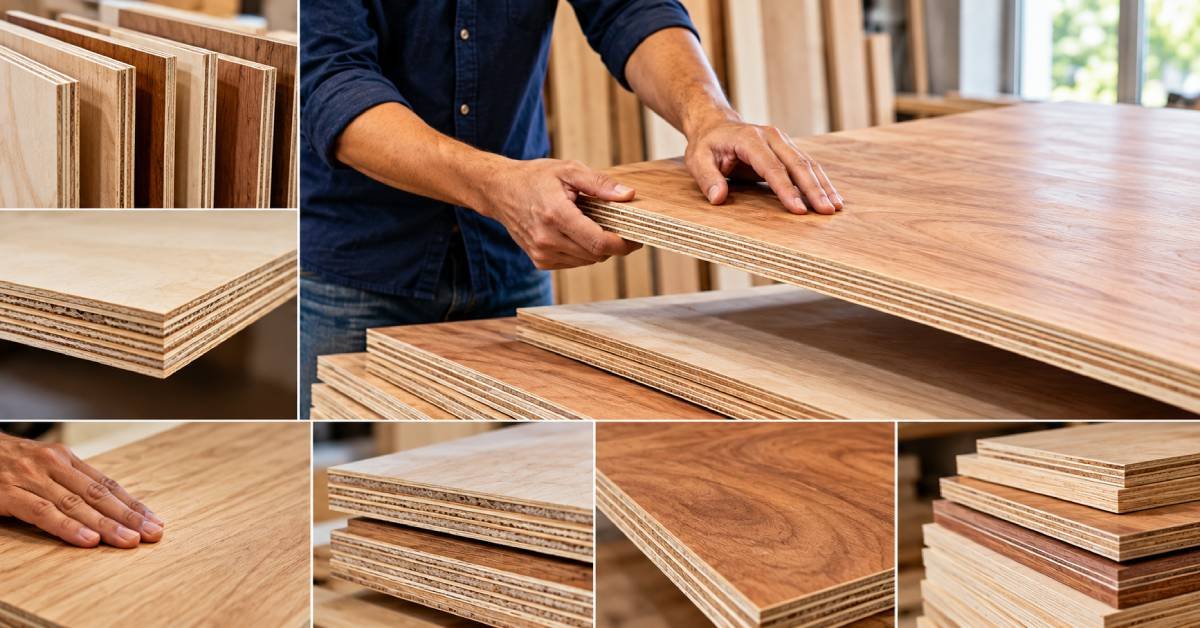
Knowing how to identify good quality plywood is about going beyond the standard parameters. Sure, you can check for cracks or damage on your own, but that alone won’t decide whether your choice is good or not. You need to know about grades, thickness, certifications, etc.
Shopping for plywood may seem easy until you’re standing in front of a wide array of them. The main difference is what's between the layers: wood quality, adhesive, pressing, thickness and production.
Whether you're constructing a wardrobe, kitchen cabinets, doors or furniture, learning how to check plywood quality can save you time, effort, and money.
Here's what to look out for before you buy.
How to Identify Good Quality Plywood: A Guide for Beginners
The first thing to consider when determining how to identify good quality plywood:
1. Check the Plywood Grade First
There are different grades of plywood depending on its resistance to water and what application it is meant for.
Common options include:
MR Plywood
Moisture Resistant plywood, usually for dry interior rooms, such as bedroom cupboards and living-room cupboards.
Plywood BWR
Boiling Water Resistant plywood for superior moisture Resistance than MR Plywood.
BWP Plywood
Boiling Water Resistant plywood (preferably used for places which have extreme moisture such as bathrooms and kitchens).
BWP Plywood Vs MR Plywood Vs BWP Plywood — A Comparison
The main difference between BWP plywood and MR plywood is the moisture resistance. MR plywood is suitable for relatively dry environments; BWP is a more suitable option for environments where moisture is a high risk.
| Plywood Grade | Moisture Resistance | Best For | Typical Applications |
|---|---|---|---|
| MR Plywood | Moderate | Dry indoor areas | Wardrobes, beds, shelves, living-room furniture |
| BWR Plywood | High | Areas with occasional moisture | Kitchen cabinets, bathroom furniture, doors |
| BWP Plywood | Very High | Moisture-prone areas | Kitchens, bathrooms, utility areas and other damp spaces |
2. Inspect the Edges
Another way to check the quality of the plywood is to inspect the edges.
Good plywood should have:
- Evenly arranged layers
- Consistent thickness
- Minimal visible gaps
- No loose or peeling veneers
- Clean, well-pressed edges
Beware of empty spaces, big gaps or areas where the layers are inconsistent. Internal voids can compromise the strength of a sheet and the way screws and fittings grip.
3. Check for Warping
Turn over the plywood or glance down the long side from one end.
A good sheet should be reasonably flat. Beware of sheets with noticeable:
- Bending
- Twisting
- Bowing
- Uneven surfaces
Slightly imperfect sheets can cause issues while doing carpentry and can become more visible after installation.
4. Look at the Surface Veneer
Feel it! Take a hand and rub down the top. It needs to be smooth to the touch and also evenly textured.
Watch out for cracks, rough edges, too many knots, patches, or irregular surfaces. The finish quality is even more crucial for decorative furniture, since damage will be exposed once the surface is covered with laminates, veneers, or paint.
But keep in mind, a good looking surface doesn't necessarily mean the plywood is superior in construction. Be sure to also look at the construction and grade.
5. Check the Thickness
Disregard the thickness shown on the paper.
Compare material thicknesses where the material is not the same thickness (for example at welds and in heavy gauge material). If available, compare to an existing part.
In the context of furniture and interior use, the proper thickness should be considered. Thicker Sheet does not necessarily mean better quality plywood for the house – what's important is the right combination of quality, structure and thickness.
6. Check the Plywood Quality Grades and Certification
Prior to purchase, check the sheet for the grade, thickness and certification details, grade, information on the manufacturer and the relevant markings.
For plywood available in India, the BIS/ ISI certifications for the product would be an additional quality benchmark.
Verify the manufacturer specifications and warranty as well, since salespeople usually make verbal promises.
7. Ask About the Core and Adhesive
The more layers, the stronger it will be. The strength of the layers and the quality of the glue are factors that can make plywood more durable.
Ask the seller:
- What type of wood is used?
- What adhesive is used?
- Is it for Interior or Damp Areas?
- What standard does it meet?
- Is there a manufacturer's warranty?
A decent manufacturer ought to have answers.
8. Don't Choose Plywood by Price Alone
An attractive, affordable sheet may seem okay as you're working on a lot of furniture but replacing this same furniture when damaged is a lot more expensive.
On the other hand, just because the plywood is more costly doesn't necessarily mean it is the best option.
Compare grade, thickness, construction, moisture resistance, certification, warranty, and application instead of just price.
9. Choose the Right Plywood for the Room
For bedroom wardrobes or living-room furniture, MR Plywood might be enough if exposure to moisture is not much. For kitchen cabinets, bathroom furniture or "anyplace where moisture is likely to creep in," a more moisture-resistant grade such as BWP might be more appropriate.
The right plywood isn't the strongest or the most costly. It is the one that suits the task.
How to Choose Plywood: A Quick Checklist
| What to Check | What Good Plywood Should Show |
|---|---|
| Grade | Suitable for the intended application |
| Edges | Even layers with minimal gaps |
| Surface | Smooth and relatively consistent |
| Flatness | Minimal warping or bending |
| Thickness | Consistent across the sheet |
| Core | Properly bonded layers |
| Certification | Relevant standards and manufacturer details |
| Warranty | Clear product warranty where applicable |
FAQs
1. How can I check plywood quality before buying?
Test the grade, ply, thickness and surface, flatness, and certification. Ensure that there are no large gaps or cracks and that the plies are even.
2. What is the best quality plywood for home?
MR or moisture resistant plywood is the right option for interior applications and BWP, or boiler pressure treated plywood is suitable for areas prone to water exposure.
3. What are the main plywood quality grades?
Typical grades are MR, BWR and BWP which have higher resistance to moisture. Always select the grade based on the application.
4. Which is better: BWP plywood or MR plywood?
The better moisture resistance of BWP plywood makes it the most preferable for use in kitchens and other similar moist zones. For use in dry indoor furniture MR plywood is good enough.
5. How do I choose plywood for furniture?
Keep in mind the furniture's placement, exposure to moisture, the desired thickness, plywood type, core construction and manufacturer instructions when purchasing.
Conclusion
Save yourself hundreds of dollars down the track in damages and junk furniture by knowing what to look for and how to identify good quality plywood.
Use the grading, edges, face, warping, thickness, certifications, core and adhesive to your advantage. Most importantly, do not judge the plywood on its surface.
If you run your finger over the surface of a sheet it can appear smooth and fine and by looking at the surface, it can give you an impression of quality. But a few minutes of pre-purchase inspection can greatly improve the durability of your furniture.
Learn More: How Decorative Plywood Enhances Interior Design and Furniture Appeal


