
MR vs BWP Plywood: Differences, Uses and Buying Tips
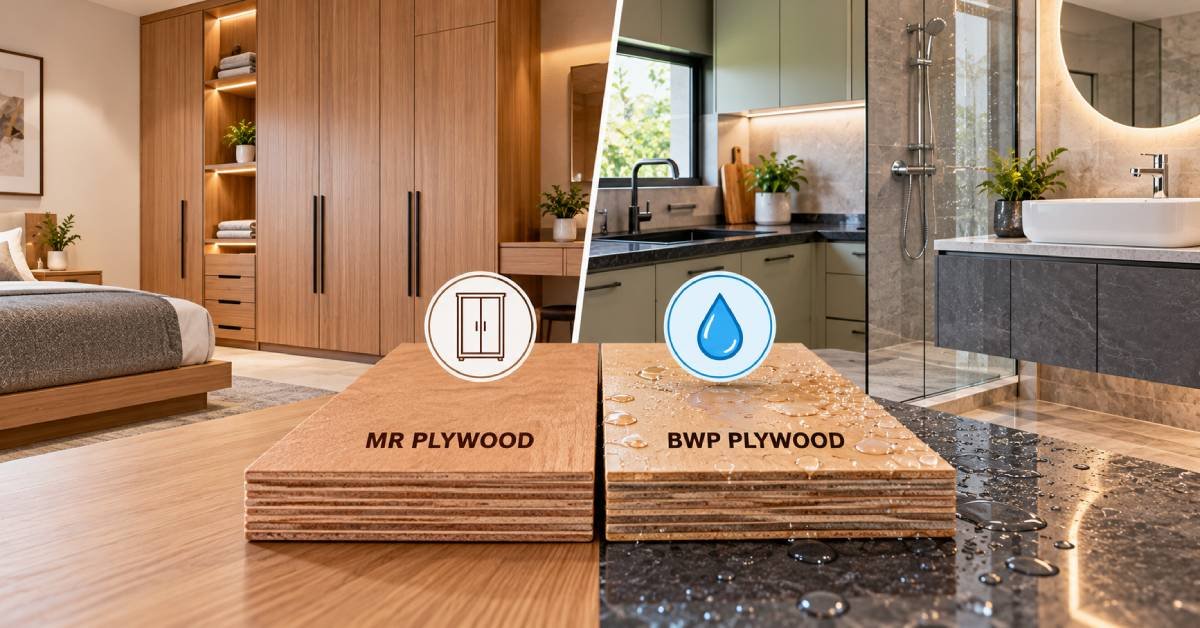
The choice between MR vs BWP Plywood is about moisture resistance, waterproof performance, maintenance, and of course, cost. The correct plywood is an essential part of long lasting furniture.
Let's say you're designing a new kitchen. The cabinets are gorgeous; everything goes together perfectly; you've even planned out each drawer. That is, until a couple of years down the road the edges of the cabinets start to swell as a result of moisture. The problem may not be the design or the installation, but rather the plywood beneath.
So, MR plywood vs BWP plywood — which is better? Both provide a suitable solution for the respective moisture conditions but help you be smarter when selecting the right material for your house without overspending.
What Is MR Plywood?
MR stands for Moisture Resistant plywood. It is a type of plywood that is suitable for use in furniture that will be used in an indoor environment. Usually applied to furniture made for indoor use.
These can also be called commercial plywood and MR grade plywood. It can be used for furniture in rooms which are not exposed to moist conditions, although it is not waterproof and can get damaged over time if exposed to water for a long period.
Best uses of MR plywood:
- Bedroom wardrobes and dressing tables
- Study tables and bookshelves
- Living room cabinets
- Office furniture
- Interior partitions in dry areas
Choose MR plywood when the furniture will remain indoors and does not face frequent water exposure.
What Is BWP Plywood?
BWP, or Boiling Water Proof is a special type of glue used to manufacture BWP Grade plywood. This glue is meant to be more durable than the regular MR grade glue, specifically for high moisture conditions.
It is often chosen for spaces where furniture might be subject to occasional spraying, wet, humid conditions and water. However the actual performance is determined by the product specifications, manufacturing quality, sealing and installation.
Best uses of BWP plywood:
- Kitchen cabinets and under-sink storage
- Bathroom vanities
- Utility room furniture
- Laundry cabinets
- Furniture in moisture-prone areas
When deciding on waterproof plywood for home, the BWP classification is often a better option for applications that are prone to wetness. Keep in mind, however, that water-resistant plywood is not resistant to damage if its edges are not protected or if it is held underwater for long periods.
MR vs BWP Plywood: Key Differences
The difference between MR and BWP plywood lies in their features and uses:
| Feature | MR Plywood | BWP Plywood |
|---|---|---|
| Full form | Moisture Resistant | Boiling Water Proof |
| Moisture resistance | Suitable for normal indoor humidity | Designed for more demanding moisture exposure |
| Waterproof performance | Not waterproof | Higher water resistance when properly manufactured |
| Common applications | Wardrobes, tables and shelves | Kitchen cabinets, bathroom vanities and utility furniture |
| Bonding system | Generally uses interior-grade bonding | Uses bonding designed for greater water resistance |
| Relative cost | Usually more affordable | Usually more expensive |
| Maintenance | Requires protection from water | Also requires proper sealing and maintenance |
| Best suited for | Dry indoor spaces | Moisture-prone applications |
MR Plywood vs BWP Plywood: Where Should You Use Each?
Choosing the right plywood is based on where the furniture will be placed and the levels of moisture it will likely be exposed to.
| Furniture or Application | Recommended Plywood | Why |
|---|---|---|
| Bedroom wardrobe | MR | Usually faces limited moisture exposure |
| Study table | MR | Suitable for dry indoor conditions |
| Living room TV unit | MR | Generally used in a dry environment |
| Kitchen base cabinets | BWP | Better suited to moisture-prone areas |
| Under-sink cabinet | BWP | Helps handle occasional splashes and leaks |
| Bathroom vanity | BWP | Better suited to humid conditions and splashes |
| Utility room storage | BWP, depending on exposure | Offers additional moisture protection |
| Dry kitchen wall cabinets | MR or BWP | Depends on proximity to steam, plumbing and moisture |
These are suggestions. When the cabinet is in the vicinity of the water source or if the water source is poor ventilation, or under high steam, it is recommended to select a higher grade of moisture resistance.
Which Is the Best Plywood for Modular Kitchens?
In general, BWP plywood is the best plywood for modular kitchens for areas exposed to water, plumbing leaks and steam. BWP offers superior resistance to bonding failure caused by moisture in the product, as long as the product conforms to the required specifications.
MR Plywood may be used in a dry overhead cabinet or dry section of a pantry, if very far from water sources (sinks) or other sources of moisture, and within the recommended parameters of the manufacturer's specifications.
MR vs BWP Plywood: Which Is More Affordable?
MR Plywood is less expensive and BWP Plywood is more expensive because of its water resistant quality.
This will be determined by the thickness, sheet sizes, core quality, brand, certification and local market rates.
| Cost Consideration | MR Plywood | BWP Plywood |
|---|---|---|
| Initial purchase cost | Generally lower | Generally higher |
| Suitable for budget furniture | Yes | Yes, where moisture resistance is needed |
| Value in dry rooms | Often better | May offer more protection than necessary |
| Value in wet-prone areas | Can be a false economy if unsuitable | Often worth the extra cost |
Instead of simply searching for the lowest priced sheet, it is worth comparing the cost to the life you expect the furniture to last. Paying more for BWP plywood for a kitchen sink cabinet will hopefully make it less likely to prematurely fail.
Buying Tips for MR vs BWP Plywood: How to Choose the Right One
1. Assess the Moisture Exposure
A wet room doesn't need an expensive wardrobe and a dry bedroom doesn't need a cheap wardrobe. Depending upon the application, use MR plywood for dry conditions and BWP for higher splashes/marines.
2. Verify the Grade and Certification
Read the manufacturer's literature, look for markings and standards that meet BIS standards, IS 303, IS 710 for Indian standards for general purposes and marine purpose plywood respectively. Make sure you know which standard and grade the product falls under.
3. Inspect the Core and Surface
Look for a flat surface, consistent thickness, and a solid core. You can spot quality issues by looking for gaps, broken edges, uneven layers, or too much warping. If your plywood is going to support heavily loaded furniture or other weights, ask the manufacturer about quality assurance.
4. Compare the Total Cost
Compare sheets of the same thickness, size and grade – don't just compare prices. Consider all costs including trimming, wastage, edge banding, laminates and installation. A cheaper sheet may actually be less cost effective if it does not do the job or is of poor quality.
5. Ask About Warranty and Usage Conditions
Read about warranty conditions, installation requirements and what it doesn't cover. Any water behind the BWP ply can cause damage, so avoid it getting in through open edges, fractured laminates or plumbing leaks.
FAQs
Q1. Is BWP plywood better than MR plywood?
Yes, BWP plywood can generally be used in applications exposed to more moisture than MR plywood.
Q2. Can MR plywood be used in a kitchen?
Sure, MR plywood can be used in the dry locations of a kitchen like inside cabinets out of reach of plumbing and sinks.
Q3. Is BWP plywood completely waterproof?
Yes, BWP plywood is much more resistant to water than other plywood, withstanding 72 hours or more of water immersion.
Q4. Which plywood is best for bathroom furniture?
In general, BWP plywood is best suited to bathroom vanities and storage which will be wet or splash-prone. Sealants, venting, and splash-proofing are still important, even when using plywood.
Q5. Is MR plywood cheaper than BWP plywood?
Typically, yes. MR plywood is cheaper than BWP plywood because it provides less water resistance.
Conclusion
The key to selecting the right plywood is to look at how the furniture will be used. MR plywood is a smart, low-cost option for wardrobes, bookshelves and more in the dry, enclosed areas of the home. BWP plywood has a higher resistance to moisture, so it is ideal for kitchens and bathrooms.
Compare price, grade, core quality, installation requirements and standards between MR vs BWP Plywood. Don't just focus on the first price on the label. Selecting the best plywood for various applications can safeguard your furniture and cost you less over time whilst ensuring your interiors look fresh for years to come.
Learn More: Plywood Sheets Price Guide 2026: Everything You Need to Know Before You Buy


