
Natural Plywood: Types, Benefits, Uses and Applications
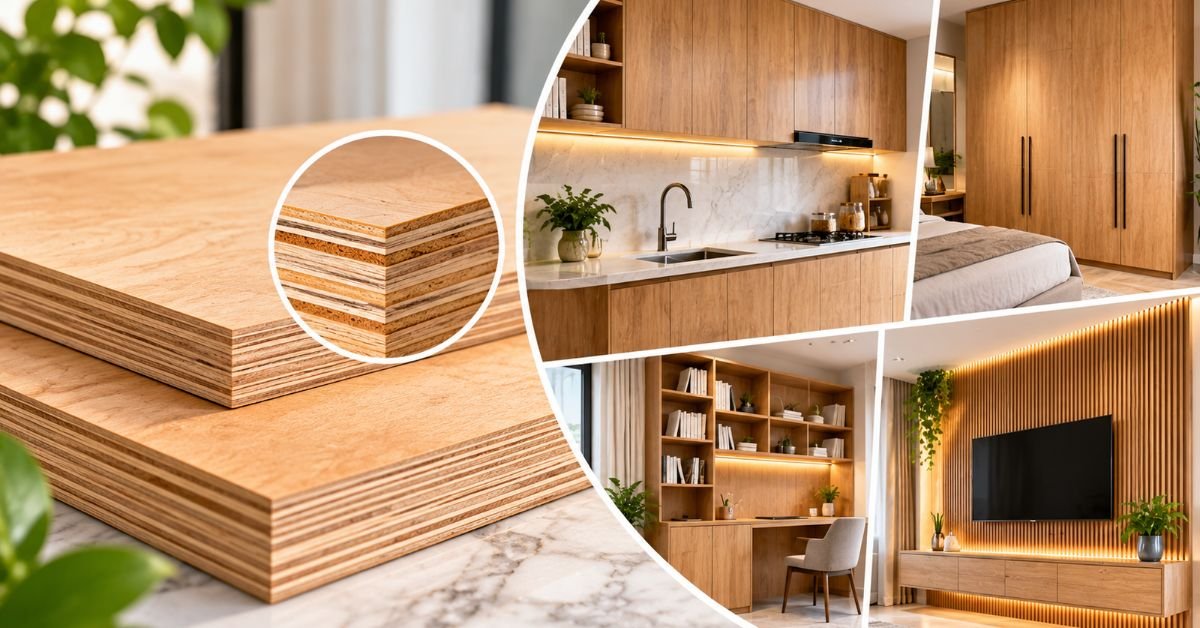
There are various types of plywood that can be used within the home and for new furniture design. These include wardrobes, kitchen cupboards, beds, bookshelves and wall panelling. From the wide variety of materials now available, it can be difficult to recognise and select the ideal option for your project.
Natural plywood is frequently favoured as it has the robustness of engineered wood as well as the aesthetic and tactile qualities of natural wood. Based on the type of wood, plywood construction and finish, it can therefore be utilised for both structural and decorative purposes.
Below, we explore what natural wood plywood is, together with information regarding its construction, and how natural plywood differs from other types. We also discuss the various types of natural plywood and their benefits and uses.
What is Natural Plywood?
Natural plywood is an engineered wood product which is created by hot pressing layers of natural wood veneer. Typically, the layers of veneer are positioned so that the grain is in opposing directions – forming a ‘cross grain’ effect which provides added strength and stability.
Unlike particle or MDF (medium density fibreboard) which are made from wood particles or fibres, natural plywood continues to consist of distinct wood layers. Moreover, the outermost wood veneer can often contain the natural grain, pattern and texture of the wood. Hence, it is frequently used for furniture and for interior designs where there is an emphasis on aesthetics.
Natural plywood can be produced in varying thicknesses and sizes and is available in a choice of wood type and quality. Again, based on its construction and finish, natural plywood sheets can be used in a number of ways – for example, in furniture, cupboards and partitioning
How Natural Plywood is Made
Whilst the methods used by manufacturers can differ, the production of natural plywood follows a similar general process.
1. Timber selection
Appropriate logs are chosen. The type and quality of timber will then influence the plywood’s aesthetic and mechanical properties.
2. Veneer production
The logs are treated to soften and are then run through specialist equipment which produces wooden veneer sheets. Layers of these sheets are then used to construct the plywood.
3. Drying and assessing
Following drying to the desired level of moisture content, veneers are analysed for imperfections, thickness and finish. Veneers are then allocated to specific layers of the plywood.
4. Application of adhesive
Appropriate adhesive is added between the plywood layers. As well as facilitating the plywood assembly, the adhesive also to some extent influences the material’s resilience to moisture and environment.
5. Assembly and pressing
Layers of veneer (with opposite grain direction) are combined and then hot-pressed to form a tightly constructed panel.
6. Cutting, sanding and finishing
Plywood panels are then cut to standard size. They are subsequently sanded and assessed. Further finishing can also be applied, dependent on the plywood’s proposed use.
Hence, natural plywood constitutes a highly adaptable engineered wood material which possesses the aesthetic features of natural wood.
Types of Natural Plywood
As noted above, different types of plywood exhibit differing properties. Natural plywood can vary in terms of wood type, number of layers, adhesive and production method, as well as in relation to its planned function.
Common types of natural plywood are as follows:
1. Hardwood Plywood
As the name suggests, hardwood plywood is produced from hardwood veneers. Usually, it is favoured where there is a need for a sturdy and/or visually pleasing material.
Hardwood plywood can be used for furniture items, cupboards, doors and wall and interior panels. Depending on the type of wood and plywood constitution, it can provide a durable and aesthetically pleasing surface for domestic and commercial settings.
2. Softwood Plywood
Softwood plywood is formed from softwood veneers such as pine and other coniferous tree species. It is often used for construction projects, as well as for a variety of other functions.
Depending on the type of wood, plywood quality and adhesive, this type of plywood can demonstrate a range of properties. For situations where structural properties are of primary importance, it can represent a sensible option despite its typically less striking aesthetic.
3. Decorative Natural Veneer Plywood
This type of natural plywood has a top layer of high-quality natural wood veneer. Thus, the natural wood grain and variation is showcased.
It is often favoured for high quality furniture, cupboards, and wall and interior panels. Furthermore, it allows for visual effects akin to natural wood, without the necessity for the whole plywood panel to be constructed from solid wood.
4. Commercial Plywood
Commercial plywood represents a general purpose type of plywood and is used for domestic furniture and interior designs. Its quality and constitution will vary between manufacturers.
Typically, it is used in the production of cupboards, bookshelves and tables. Nevertheless, when investigating a commercial plywood product, care must be taken to ascertain the adhesive and moisture resistance category as not all commercial plywood will be appropriate for humid areas.
5. Marine Plywood
Specialist wood veneers and adhesives are employed in the production of marine plywood so that it can be more resistant to moisture and operate effectively in harsh environments.
As well as in boat interiors, it is also often used in bathrooms, kitchens and other areas where moisture is a concern. Despite this, marine plywood should not automatically be considered fully waterproof. Correct sealing, edge protection and installation procedures are still needed.
Comparing Natural Plywood Types
Below is a summary of key features and uses for a range of ply board types:
| Plywood Type | Main Characteristics | Common Applications |
|---|---|---|
| Hardwood plywood | Made using hardwood veneers | Furniture, cabinets and doors |
| Softwood plywood | Made using softwood veneers | Construction and general applications |
| Decorative veneer plywood | Features an attractive natural wood surface | Premium furniture and wall panelling |
| Commercial plywood | General-purpose plywood | Wardrobes, shelves and cabinets |
| Marine plywood | Designed for enhanced moisture resistance | Marine and moisture-prone applications |
Note that there can be overlaps between the above groups. Hardwood plywood can also be decorative natural veneer plywood. Likewise, commercial plywood may be constructed from hardwood veneers. For these reasons, it is critical to examine the detailed product data.
Benefits of Natural Plywood
Natural plywood has many beneficial properties and is commonly used within the furniture, and building industries.
Strength
Natural ply wood board has a cross grain, which is an asset as it spreads weight evenly and also helps to prevent end-grain breakage.
Hence natural plywood can be used to create furniture including tables, cupboards, bookshelves and wardrobes.
Natural Look
As well as having a natural outer layer, natural plywood can also feature distinctive wood grain and colour and can possess a particular tactile sensation, according to the type of wood.
Natural plywood is therefore a favoured medium for people wishing to introduce natural wood elements within their home. This does not always necessitate furniture being made entirely of solid wood.
Versatility
Natural plywood is simple to saw, drill and shape. As well as being used structurally, it can also be used for ornamental purposes. Consequently, it is applicable for domestic, commercial and institutional use.
Stability
As noted above, the cross grain of natural plywood enhances its stability and assists in further restriction of movement (both in terms of expanding and contracting) when compared to many solid wood boards in similar conditions.
Whilst like all woods, natural plywood can be influenced by humidity and temperature, in general, if it is properly manufactured, stored and installed then its stability can be sustained thanks to its nature as an engineered wood.
Ease of Use
Natural plywood can readily be shaped, sawn and drilled. It can also be covered in laminate, painted, polished or re-clad with natural wood.
Therefore it is suitable for custom furniture and also for major interior design work.
Efficient Use of Natural Timber
Generally, the plywood manufacturing process makes use of relatively slender wood plies. Therefore, in comparison to other instances, it can be used more effectively.
However, the eco-friendliness of natural plywood will also depend on several issues such as eco-friendly forestry practices, methods of manufacture and the nature of the adhesives used alongside the product’s lifespan.
Suitable for Different Finishes
Natural plywood can be finished in a number of ways. Depending on the calibre of the outer wooden ply as well as the design envisaged, it can be varnished, painted, laminated or re-clad with natural wood.
This facilitates a broad range of interior design styles to be implemented, and still allows for the advantages of an engineered wood product to be realised.
Natural Plywood Uses and Applications
Besides being highly versatile natural plywood is widely used. It can be utilised in both basic and premium interior design.
Below are some of the more prevalent areas of use.
1. Furniture Manufacturing
Given its strength, ease of use and aesthetic, natural plywood for furniture manufacturing is common.
It may be used to form:
- Beds and bed-frames
- Study/office tables
- Dining tables
- Bookshelves and cupboards
- TV cupboards
- Side and coffee tables
Depending on the furniture type, expected weight and required strength, an appropriate quality and thickness of natural plywood must be chosen.
2. Kitchen Cabinets and Storage Units
Within kitchens, products need to be strong enough to endure regular use and also to hold weight. In addition, they may occasionally have to resist water. Consequently, moisture-resistant or BWP grade plywood might be considered – again dependent upon product data.
Natural plywood can be used to form cupboard frameworks, shelving and drawer systems. Specific ornamental sections can also be made from it. Effective edge treatment and prevention of water penetration are crucial for ensuring the durability of such products.
3. Wardrobes and Bedroom Interiors
Wardrobes are widely made from natural plywood. Sections such as wardrobe doors, dividers, shelving and drawers can all be formed from it.
Moreover, given its versatility, natural plywood can be adapted to allow wardrobe designs to be suited to a person’s available space and storage requirements.
4. Doors and Door Frames
Plywood can additionally be used to manufacture recessed doors and particular parts of doors. As with other plywood uses, the cross grain provides a sturdy base for a variety of surface treatments to be added.
Once again, the required quality and composition of the natural plywood will depend on where the door is to be placed and the environmental conditions it will be exposed to.
5. Wall Panelling and Decorative Interiors
Ornamental natural veneer plywood can be particularly effective in creating a cosy and fashionable interior.
Areas where this form of plywood may be used are:
- Feature walls
- Internal wall panelling
- Ceiling sections
- TV background panels
- Counter tops
- Office interiors
The natural wood grain can introduce an intriguing element to interior designs. It can be effectively utilised within both contemporary and classic design themes.
6. Office and Commercial Furniture
Natural plywood is also used in offices, retail stores and hotels, as well as other commercial locations.
Typically, it is used in offices for desks, meeting tables and countertops. It can also be used for storage and exhibition. Again, the differing finishing choices mean that it is a favourable choice for developing distinctive commercial interior designs.
7. Shelving and Partitions
Plywood can be used to create open shelving and dividers. Being both strong and easily worked with, it is also a suitable medium for custom work.
As mentioned above, the correct thickness and quality of plywood will vary in accordance with the length of, and anticipated weight on, a shelf together with how it is to be fitted.
Understanding Plywood Quality Grades
As well as understanding which type of plywood to use, it is important to evaluate its quality. This can in turn influence both the appearance and strength of the plywood and so impact on whether it is suitable for a particular use.
In India plywood is commonly graded in line with pertinent BIS standards and data. General purpose and marine plywood are respectively graded under IS 303 and IS 710.
Key points to evaluate in terms of plywood quality are:
1. Face Veneer Quality
To a great extent, the quality of the outer ply will affect that of the plywood. Higher quality outer ply usually contains fewer blemishes and has a more uniform appearance. It is often consequently favoured for ornamental use.
2. Core Quality
As with the outer ply, the plywood’s inner composition is also significant in relation to its strength. High quality plywood will have a uniformly structured inner part and good bonding between each ply. Ideally there will also be minimal air pockets in this area.
3. Adhesive and Bonding Quality
The type of adhesive used will influence both the bonding between the plywood plies and also the plywood’s moisture resistance. It is necessary to ensure that the plywood meets the relevant quality requirements for its intended use.
4. Thickness and Tolerance
Plywood is available in a range of thicknesses. Common thicknesses are 6mm, 9mm, 12mm, 16mm, 18mm and 25mm. The necessary thickness of plywood will be determined by the furniture design, expected weight and strength requirements.
5. Manufacturing Standards
Establish that the plywood was manufactured to a relevant BIS standard. Check the product and manufacturer data. Referencing a recognised standard can also be a useful means of evaluating the quality of a product.
It is important to understand that, although interlinked, the quality of the outer ply, inner composition and the moisture-resistance grade of plywood are separate facets of its overall quality and so should not automatically be regarded as being identical.
Natural Plywood or Solid Wood – Which is Best?
Each kinds of plywood has its own benefits. The correct material will vary according to use, cost and style.
| Feature | Natural Plywood | Solid Wood |
|---|---|---|
| Construction | Number of wood veneer plies | Piece(s) of natural timber or multiple pieces |
| Stability | Usually good | May swell, shrink or twist as a result of humidity levels |
| Appearance | Natural wood veneer | Continuous natural wood grain |
| Workability | Easy to cut and shape | Varies according to wood type |
| Design flexibility | Variety of ply thickness and panel size | Varies according to wood type and size |
| Maintenance | Will vary according to finish and location | Varies according to wood type and level of care provided |
| Cost | Usually a cost-effective option for panels | Depending on the wood type, can be costly |
Natural plywood is often a good choice for furniture, wardrobes, kitchens and internal paneling. Solid wood may be most suitable for where there is a requirement for thick natural wood, intricate detailing and/or the facility to re-apply finish to all areas of the wood.
There is no one ‘better’ material. The most suitable option should be determined by individual project needs.
FAQs
1. What is natural plywood used for?
It is used for furniture, wardrobes, kitchens, doors, shelving, wall paneling, room dividers and commercial environments.
2. What types of natural plywood are there?
Hardwood, softwood, decorative veneer, commercial and marine-grade are all common. These will differ in their characteristics, influenced by the wood type, core and adhesive.
3. Is natural plywood good for furniture?
Yes. Natural plywood is well suited for furniture as it is strong, stable and can be easily cut. In addition, it can be produced with a natural wood veneer.
4. How is natural plywood different to generic plywood?
Typically, natural plywood is made with natural wood veneers. Generic plywood is a generic term which does not specify wood type, quality or core. Always review product information to ascertain details of the product you are buying.
5. How do I recognise high quality natural plywood?
Assess the veneer, core, adhesive and evenness of ply thickness. Select a product which fulfils the needs for your chosen use.
6. Is natural plywood waterproof?
Not necessarily. Water resistance will be affected by the adhesive, production quality and further care provided. Even marine grade plywood must be installed and finished correctly to ensure water resistance.
7. What is the ideal ply thickness for furniture?
This will vary according to the furniture element and anticipated weight that it must support. For instance, 18mm is often used for wardrobe and kitchen unit carcasses. Thinner ply may be appropriate for furniture backs and drawers.
Conclusion
Natural plywood is an engineered wood product which combines the style of natural wood with the multi-ply functionality. It is strong, stable and can be easily cut and finished. As a result, it is well suited for furniture, wardrobes, kitchen units, doors, wall paneling and commercial environments.
Whilst knowledge of the benefits of a product is important, so too is the selection of an appropriate option. Consideration should be given to the quality of the veneer, the type of core, ply thickness and adhesive together with the product’s water resistance.
Regardless of whether you are designing new furniture, updating your kitchen or tailoring furniture to specific needs, the correct natural plywood can assist in producing both stylish and functional long-lasting interiors.


