
Top 10 Mistakes to Avoid When Buying Tiles for Your Home
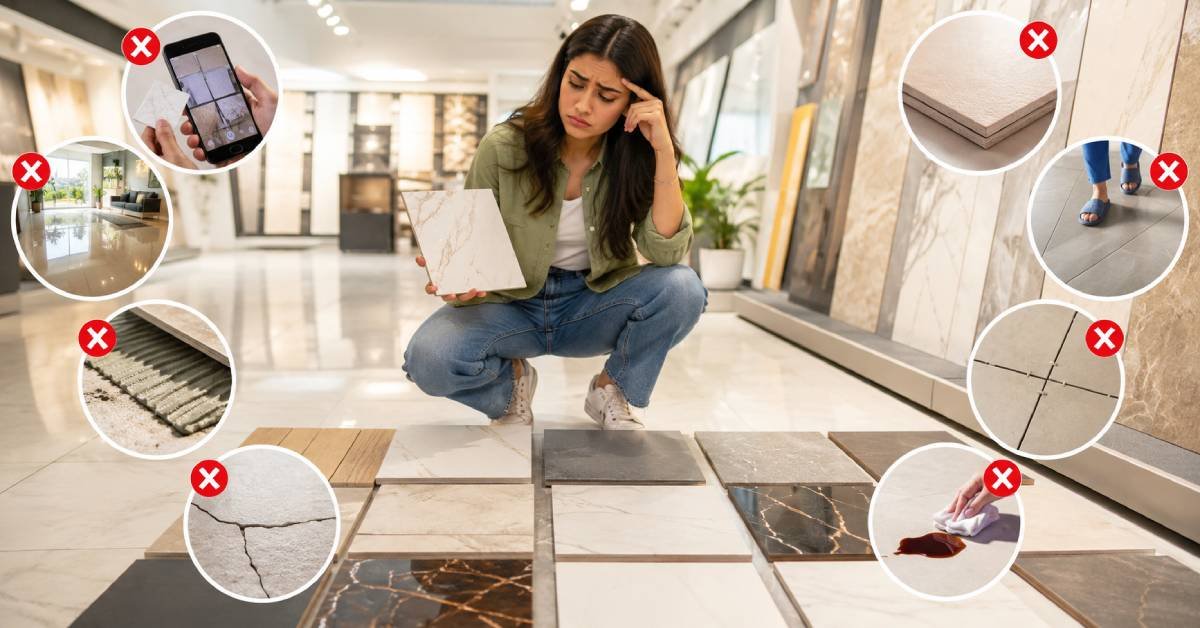
Selecting Tiles for Your Home often starts with something so simple, like a stunning pattern you've spotted in a showroom. You then look at the tiles and envision them on your lounge floor, against your kitchen cabinets, and the finishing room design starts taking shape.
Unfortunately, after they're in the house it sometimes emerges that the shade they look like at home isn't the way they look in natural light, you find it a nightmare to keep clean, or that the tile is wholly impractical for where it's being laid in your home.
This tile guide uncovers the top 10 tile buying blunders homeowners ought to prevent as well as offering some helpful tips on selecting proper tiles for your home.
1. Choosing Tiles Only for Their Appearance
A beautiful appearance is important, but it should not be the only consideration when selecting home tiles.
Before making a decision, think about:
- Where the tile will be installed
- How much traffic the area receives
- Whether the surface will be exposed to water
- How frequently it will need cleaning
- Whether the finish is suitable for the intended use
- How well it complements the rest of the interiors
2. Confusing Floor Tiles With Wall Tiles
A homeowner may find a stunning decorative tile and assume it can be used anywhere.
These will vary for floor and wall applications though. Floor tiles have to cope with foot traffic, furniture, impacts and general use, whilst decorative wall tiles may well just be designed to hang on a wall,
Consider a kitchen backsplash. A lightweight decorative wall tile might look excellent there, but that does not automatically make it suitable for a kitchen floor.
When learning how to choose tiles, always focus on products that are suitable for use on floors, walls, in the bathroom, outside or wherever your tiled item will be situated.
3. Ignoring the Different Types of Tiles
Here’s what the best tiles for home are known for:
- Ceramic tiles: walls and floors in residential spaces.
- Porcelain tiles: density and durability.
- Vitrified tiles: modern residential flooring.
- Mosaic tiles: as detail on feature walls, backsplashes, and smaller areas.
- Natural stone tiles: distinctive, organic appearance.
Your selections of Tiles for Your Home will certainly vary relying upon the wall, usage, style & maintenance needs.
4. Selecting the Wrong Tile Size
Tile size can dramatically change how a room feels.
Picture a compact living room covered with very small tiles and numerous grout lines. The floor may appear visually busy. And picture it again in a nicely sized large-format tile like the one shown here.
Large tiles can achieve a contemporary look that’s very grout line minimalist, whereas small tiles add an artisan feel with character and texture. Before you decide on a tile size.
Check first:
- Room measurements
- Wall dimensions
- Door and cabinet locations
- Drain positions in bathrooms
- Expected tile wastage
- Installation pattern
- Desired grout-line appearance
Choosing the right size is not about selecting the largest tile available. It is about finding a format that works naturally with the space.
5. Forgetting About Slip Resistance
Consider an environment such as the bathroom; a lot of water spills over the floor usually. A high gloss finish looks good on tiles – but you’re probably only aiming to look sophisticated when using it on a bathroom, kitchen, balcony, utility room and in any area where’s likely to be there, are you?
Ask us about surface finishes in our floor tile show and also consider if slip resistant attributes are what you have been aiming for. Comparing other tiles? Make sure that it is decided as fitting your purposes.
A good-looking floor is valuable, but a safe floor is essential.
6. Not Checking the Tile Under Your Home's Lighting
Lighting can influence how colours, patterns, and finishes are perceived.
Imagine selecting a soft cream tile under bright white lights. Once installed at home under warm lighting, surrounded by wooden furniture and beige walls, the same tile may appear noticeably more yellow.
Whenever possible, take a physical sample home and examine it:
- In natural morning light
- During bright afternoon light
- Under your evening lighting
- Next to furniture and cabinets
- Against existing wall colours
- Alongside other materials being used in the room
This small step can help you avoid a major design disappointment after installation.
7. Ignoring Long-Term Maintenance
Consider a busy kitchen. It might look stunning on the day of installation but after a few years of being exposed to daily wear and tear, how would it appear? Spills, grease, dust and scrubbing are features of daily living in this room.
Do you opt for interiors that are easy to maintain? If so, opt for surfaces that are relatively easy to clean and maintain. Make sure to inquire about the maintenance process involved, rather than having this uncovered once installation is complete.
8. Buying Exactly the Required Quantity
You have now reached the final part of the tile installation only to realize that you still need 4 tiles for the job, but that particular tile and shade can no longer be sourced.
Buying only the calculated quantity can create unnecessary complications.
Tiles may be lost through cutting, damaged during transportation or installation, or needed for areas with more complex layouts. Therefore, homeowners should generally purchase some additional tiles based on the project's requirements.
The appropriate allowance depends on the room size, tile format, layout pattern, and installation complexity. Your tile professional or installer can help estimate the right quantity.
It is also wise to store a few unused tiles after installation. If a tile becomes damaged years later, having matching replacements can save considerable effort.
9. Choosing Tiles Without Considering Grout
Imagine two bathrooms using the same white tiles. One uses a contrasting dark grout, creating a strong grid pattern. The other uses a grout colour close to the tiles, producing a softer and more seamless appearance.
Both can work, but they create very different visual effects.
When selecting tiles, consider:
- Grout colour
- Grout-line width
- Ease of cleaning
- Overall design style
- Contrast between the tile and grout
The tile and grout should be considered as one complete design rather than two separate decisions.
10. Making the Decision Based Only on Price
Imagine saving money on flooring today but replacing damaged tiles several years earlier than expected. The initial saving may not seem significant anymore.
Instead of comparing tiles only by their purchase price, consider their overall value.
Look at:
- Durability
- Maintenance requirements
- Suitability for the room
- Installation requirements
- Expected lifespan
- Replacement availability
- Overall appearance
FAQs
1. How do I choose tiles for my home?
Start by considering tile materials, sizes, finishes, and colours before making a decision.
2. Which tiles are best for home flooring?
Ceramic, Porcelain, Vitrified, Mosaic, and Natural stone tiles are the best choices.
3. Can wall tiles be used as floor tiles?
Not always. Wall tiles may not be designed to withstand the same level of weight, traffic, and wear as flooring products.
4. Should I buy extra tiles?
Yes. Some additional tiles are usually advisable because cutting, installation, transportation, and future repairs can create a need for replacements. The exact quantity depends on the project and layout.
5. What should I consider besides tile design?
Look at durability, application, size, surface finish, slip resistance, maintenance, lighting, grout, quantity, and budget.
Conclusion
The selection of Tiles for Your Home is no mere case of finding ones that appeal to eye as it is actually a decision that will outlive a single trip to a showroom and even that tile install itself.
The types of tiles you choose must complement the space, make sense as well as suit the look of your whole interior, it must resist day to day wear and tear and also be relatively straightforward in use too.
By keeping this tile buying guide in mind and applying just a few smart tile selection tips, you’ll end up with the perfect tile for your space that you can love for years to come.


