
What Are the Different Types of Kitchen Sink Materials?
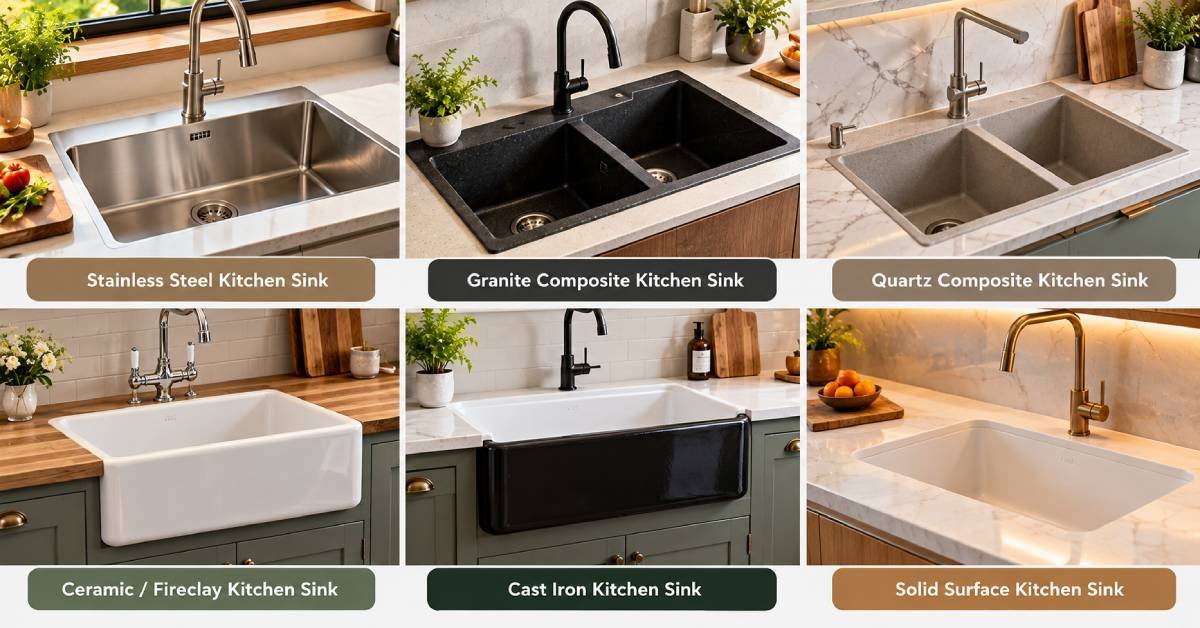
It is important to pick a suitable sink material. There are many types of kitchen sink materials on the market, thus it can get a bit confusing. Your kitchen sink has a lot to do in terms of washing, food preparation, contact with greasy dishes and plenty of water.
It is important to know about all kinds of kitchen sink materials to be able to select one suitable for you according to your cooking and other preferences.
Types Of Kitchen Sink Materials
1. Stainless Steel Kitchen Sinks
The most common choice among Indian homes. Due to its versatile nature, affordability, and low maintenance, it is ideal for busy families, practical kitchens, and budget conscious people. It fits into compact kitchens to large modular kitchens. It’s made of a steel alloy that does not rust or corrode even after regular exposure to water.
Stainless Steel Kitchen Sink Pros and Cons
| Pros | Cons |
|---|---|
| Rust and corrosion resistant when maintained. | May be prone to scratches if used regularly. |
| Available in various sizes and designs. | Certain finishes can show water marks and fingerprints. |
| Easy to clean and good for daily cooking. | Metal utensils and running water can produce considerable noise. |
2. Granite Composite Kitchen Sinks
Made of a blend of crushed granite or other minerals combined with resin, creating a tough surface. Such sinks are widely favoured by homeowners in search of sinks which will match modern kitchen decor.
With their availability in colours such as black, grey, beige, and white, these sinks are capable of coordinating with counters, cabinets, and backsplashes. The textured look also makes them a good choice for those not interested in a stainless steel reflective surface.
Granite Kitchen Sink Pros and Cons
| Pros | Cons |
|---|---|
| Gives a high-end, natural stone-like look. | Priced higher. |
| Resilient to common scratches and stains. | Can be quite heavy and may need support. |
| Sturdy design reduces sound. | Small stains may show on light-coloured sinks. |
| Colours suit contemporary designs. | Might chip or break under heavy weight. |
3. Quartz Composite Kitchen Sinks
They are made of quartz materials and resin. Despite the fact that they are frequently compared to granite composite, they are separate types of products, and their look and durability depend on the manufacturing recipe used by the producer.
They usually feature a smooth or slightly textured surface and come in neutral colours that will go well with modern kitchens and composite surfaces.
Quartz Composite Kitchen Sink Pros and Cons
| Pros | Cons |
|---|---|
| Provides an elegant and modern look. | More expensive than stainless steel sinks. |
| Protects against daily scratches and stains. | Gets damaged with weight or wrong cleaning methods. |
| Less noise when washing dishes. | Heat resistance can vary. |
| Compatible with quartz countertops. | Prone to staining and discolouration. |
4. Ceramic And Fireclay Kitchen Sinks
Ceramic and fireclay sinks have shiny surfaces and timelessness in their appearance. Ceramic and fireclay sinks are typically used in kitchens with a traditional look, as well as farmhouses and other kitchens using light-colored countertops.
Ceramic sinks are manufactured from fired clay, whereas fireclay sinks are made from fired clay at a higher temperature.
Ceramic and Fireclay Kitchen Sink Pros and Cons
| Pros | Cons |
|---|---|
| Easy to wipe clean. | Heavy weight may need extra support. |
| Resistance to most stains. | Shiny surface might break in case of impact with cookware. |
| White colour adds elegance. | Higher cost for larger sizes. |
| Sinks that will fit in a traditional kitchen or farmhouse. | Special cabinetry or countertop might be needed during installation. |
5. Cast Iron Kitchen Sinks
In cast iron sinks, an iron base is coated with enamel, providing the surface with a smooth, shiny surface that is available in various colours, although white is common. They can become the focal point of your kitchen.
Cast Iron Kitchen Sink Pros and Cons
| Pros | Cons |
|---|---|
| Durable construction. | Very heavy and need proper support. |
| Enamel surfaces are easy to maintain due to their shininess. | Enamel can chip easily with forceful impact. |
| Come in classic and decorative styles. | Exposure to the iron core once chipped, leading to corrosion. |
| Can fit with traditional kitchen aesthetics. | Installation and replacement are difficult. |
6. Solid Surface Kitchen Sinks
Solid surface sinks are constructed using engineered materials, which include both mineral and resin elements. There are types of these sinks that can be incorporated into the matching countertop seamlessly, forming one surface without a rim.
Solid Surface Kitchen Sink Pros and Cons
| Pros | Cons |
|---|---|
| Provides a sleek contemporary appearance. | More costly than regular sink materials. |
| Offers different colours and finishes. | May not resist heat well enough. |
| Minor surface scratches can sometimes be fixed. | Major scratches or damage may require professional help. |
| Can be customized according to specific kitchen designs. | Not all solid surface products are suitable for the same purposes. |
Stainless Steel Vs Quartz Kitchen Sink
Stainless steel is the best material for kitchen sink for function and adaptability which complement any type of kitchen setting and budget. The quartz composite material might suit your needs better if you want a stone look, are looking for matching sinks and countertops, and have extra budget.
When comparing different kitchen sink models, consider the material, design, quality and maintenance requirements to find an option that suits your kitchen.
Take into account that there is an impact from quality, thickness, and construction on performance in both types of sinks.
Types Of Kitchen Sinks
The choice of material alone will not suffice; there are other factors that contribute towards determining whether a sink can fit seamlessly into your kitchen setup.
Kitchen sinks typically come in the following types:
- Top mount sinks: This is an easy to install and replace type of sink, which is installed from the top of the countertop and is characterised by the rim.
- Undermount sinks: They are installed under the countertop to ensure that it looks nice and enables the movement of crumbs from the countertop to the sink with ease.
- Single bowl sinks: They provide a single wide basin for washing purposes; thus, they are useful when washing large pots, pans, and pressure cookers.
- Double bowl sinks: They provide two basins; thus, you can use one for washing and the other for rinsing.
- Corner sinks: Suitable for corner countertop installations.
- Farmhouse sinks: Characterised by the apron front.
How To Choose A Kitchen Sink For Your Home
The procedure of selection for the types of kitchen sink materials will become simpler by harmonising the design and practicality of the sink with its demands on the user.
Evaluate your:
- Usage: Go for a sink which is deep and big enough if you use larger cooking utensils.
- Materials: Stainless steel may be considered for its cost-effective nature while granite composite is considered for its luxury.
- Space: See if there is enough space available in your kitchen for your selected sink.
- Maintenance: Look for an option which will suit your cleaning process.
- Style: Select one which goes well with your kitchen interiors.
FAQs
1. What is the best material for a kitchen sink?
Stainless steel is the best material for kitchen sink because it is durable, low cost and low maintenance.
2. Which kitchen sink material is the most durable?
Stainless steel and granite/quartz composite are the most durable.
3. Is a stainless steel or quartz kitchen sink better?
Stainless steel is better if you want a sink that is budget friendly and lightweight. But Quartz wins in terms of aesthetics.
4. What are the different types of kitchen sinks?
Types of sinks are — top-mount, undermount, single-bowl, double-bowl, corner and farmhouse sinks.
5. How do I choose the right kitchen sink for my home?
Think about the budget, frequency of cooking, amount of space, material of the sink, installation and maintenance.
Conclusion
The most appropriate types of kitchen sink materials vary depending on the use made of one’s kitchen, the desired design and the amount of upkeep they are willing to do.
Stainless steel is reliable for everyday needs while both granite and quartz composite lend a unique look to the sink. Ceramic, fireclay and cast iron have more traditional designs, while solid surface sinks fit nicely with modern designs.
Prior to making the choice, one should compare different materials, look at the most suitable kitchen sink models and investigate installation methods. A carefully chosen sink will perfectly suit one’s home and serve them for many years.
Learn More: Quartz Stone Price in Bangalore: A Complete Buying Guide


