
Which Tiles Are Best for Home? Types, Room-Wise Guide & Buying Tips (2026)
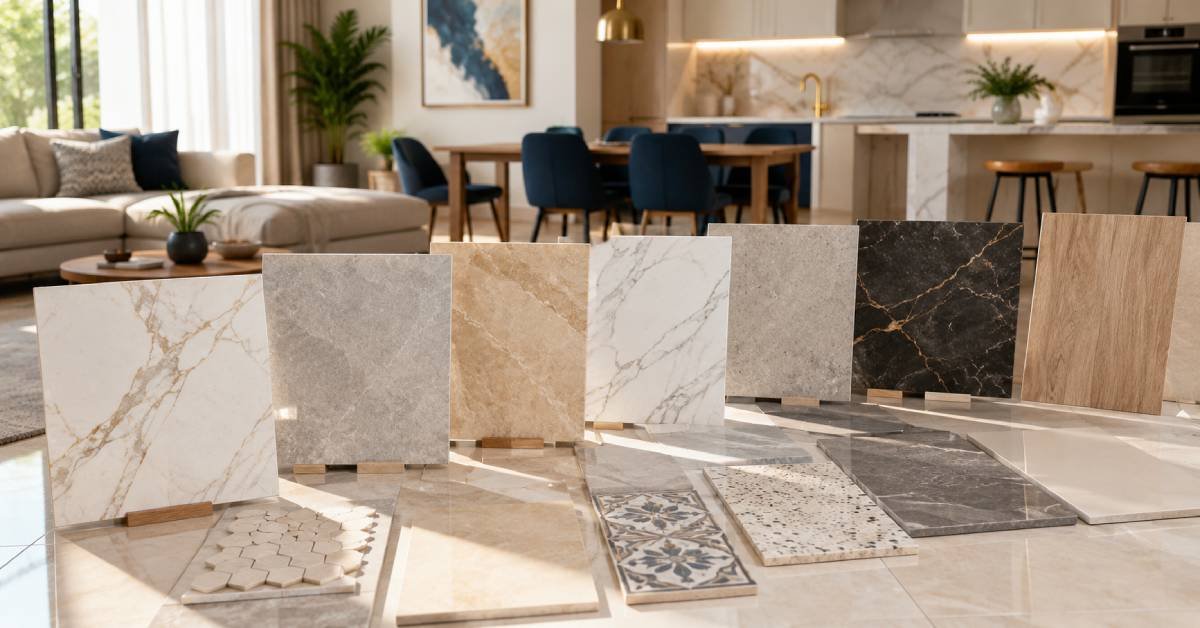
Perhaps the biggest challenge of renovation or decor is deciding which tiles is best for home. Tiles are the main foundation.
When you walk into a tile showroom, your home suddenly feels extremely empty in the face of shimmering displays, textured tiles that resemble wood or stone, a wide array of colors and different finishes (matte versus glazed).
A living-room tiling style might be unworkable in a bathroom, and what appeared to be elegant, easy-clean tiles in the kitchen may prove a little more laborious than you’d hoped.
This practical 2026 guide on tiles selection for home walks you through each major tile type, where it works best, how to recognize it, and other important aspects to consider when making your selection.
Understanding Tiles Quality Types
Let us first get the gist of the three basic tiles quality types currently on the market, as they all differ and perform differently in diverse contexts:
1. Ceramic Tiles
These are one of the most common types of domestic tiling available today. They are a cost-effective and versatile material which can be used as wall tiles and also for flooring which does not experience high levels of traffic.
For instance, one would consider using ceramic tiles if one is re-modelling their bathroom without a large budget, yet requiring a pleasing, patterned and decorative wall finish.
2. Porcelain Tiles
Porcelain is more dense and typically less porous than ceramic tiles meaning their application as wall tiles or more commonly, floor tiling, in areas such as the bathroom, kitchen, balcony and any areas that may experience higher degrees of foot traffic is more suitable.
Porcelain tiles can simulate, by design and appearance, a stone, concrete or wood look, at a fraction of the cost.
3. Vitrified Tiles
Vitrified tiles are extensively used throughout modern homes as flooring tiles as they are very strong, have a great low-absorption water feature and possess an aesthetic polish like modern living and dining areas.
This could be an ideal type of flooring tiles and guiding tiles to use if one requires the seamless look of the flooring within the dining and living rooms (if they are combined).
4. Natural Stone Tiles
Natural stones can come in many different kinds and can give an amazing sense of luxury and character to interiors, though their placement and fitting require more skill and maintenance.
As an illustration, this type of tiles is preferable when the style of appearance is paramount, though not necessarily considering low maintenance.
Best Tiles for House: A Room-Wise Tile Guide
No one way of finding which tiles is best for home. Instead, each room should be addressed on its specific function and application.
Living Room
The living room is often what guests first see and therefore visual perception of your tiling choice is of considerable importance. You also want a practical surface that will not be easily marked and can be cleaned on a day-to-day basis.
Vitrified or porcelain tiles are normally best. Large format tiles in lighter neutrals tend to create the feel of more space, while stone or marble look tiles add sophistication.
Consider a room that doesn't have a great deal of natural light - a larger format tile, preferably in a more muted colour will make the room look more spacious and the reduction in grout lines can help prevent a cluttered appearance.
Bedroom
It is common for bedrooms to be lower foot traffic areas and thus you do have more options in regard to design. Wood look porcelain is a popular trend.matte finish tiles and ceramic tile in warm tones are excellent choices for creating an inviting space.
Subtle stone effect tiles can also be used in a more minimalist design. The floor tiling should enhance your furniture and not contrast significantly with the space.
Kitchen
The needs of kitchen flooring are very specific; you will have plenty of spills, stains and food fragments on the floor. Porcelain and vitrified tile can be good alternatives, especially for floors and are suitable with regard to the relatively low porosity.
Decorative ceramic tiles and other types are ideal for your kitchen walls to create focus within the room without making the room feel over complicated.
With your glossy kitchen tiles, you want to consider maintenance, because once they start to become stained they may not have quite the impressive look you desired on their installation day.
Bathroom
As with all wet areas in your home, bathrooms require additional care; not only do you want the aesthetics to reflect your home, but you will want to ensure you are not slipping on wet flooring. Anti-slip tile is preferable to visually stunning glossy tiles.
Ceramic, porcelain and other water-resistant tile can be used to line bathroom walls. Small tiles can be advantageous in the shower area as the grout may add additional grip on the floor.
Balcony and Outdoor Areas
Outdoor spaces need tiles that can handle weather exposure, temperature changes and moisture.
Look for durable, weather-appropriate tiles with adequate slip resistance. Avoid selecting highly polished surfaces simply because they look attractive indoors.
A balcony may look beautiful with a glossy finish in a showroom, but rainwater can completely change how that surface behaves at home.
Tiles Quality Check: What Should You Inspect?
Good design is only half the decision. A proper quality check can help you decide which are the best tiles for home and avoid disappointing results after installation.
Check Surface Uniformity
Place several tiles together and inspect their surfaces. Look for visible cracks, chips, pinholes, uneven glazing or obvious colour variations.
Check Dimensions
Tiles should have consistent dimensions. Small variations can make alignment and grout spacing more difficult during installation.
Check Flatness
Place tiles against each other or inspect them on a flat surface to identify noticeable warping or bending.
Check Edges
Straight, well-finished edges help create cleaner joints. Damaged or irregular edges can make installation more difficult.
Check Water Absorption and Application Ratings
Request technical data sheets suitable for the application from the manufacturer or retailer. Bathroom walls, kitchen walls, external walls and high traffic areas will perform differently.
Buy From a Reliable Source
The quality of the tile is simple to assess if the appropriate product information, manufacturing data and recommended installation details are readily available. A visually appealing or cheaply priced tile shouldn't be chosen as the only reason for its acquisition.
How to Choose Tiles: 7 Practical Buying Tips
When comparing home wall and floor tiles please remember to take into consideration all of the above criteria and then make comparisons:
- Start with the room. First decide upon the area the tile is intended for e.g. Floor, wall, bathroom, kitchen, outdoor area.
- Consider foot traffic. Busy areas need durable flooring that can handle regular use.
- Think about water exposure. Bathrooms, balconies and wet areas require appropriate moisture resistance and surface characteristics.
- Choose the finish carefully. Glossy, matte, textured and polished surfaces behave differently in daily use.
- Plan the size. Large tiles can create a cleaner visual appearance, while smaller tiles may work better around corners, slopes and detailed areas.
- Order sufficient quantity. Account for cutting, breakage and future replacements rather than buying exactly the measured area.
- Check samples in your home. A tile can look completely different under showroom lighting compared with natural daylight or your home's artificial lighting.
Tiles Selection for Home: Design and Maintenance Matter
A successful tile selection for home balances appearance, durability and maintenance.
Suppose you fall in love with a heavily patterned tile for your entire home. If stunning in small samples, covering every room with one of these dramatic designs may overwhelm interior style and, if used in larger areas, can make the interior look busy.
Opt for them as an accent and choose something understated elsewhere. Similarly very light tiles may make interiors airy, but will be cleaned more often in busy areas. Dark surfaces can feel luxurious but may make dust and marks more noticeable.
The best home tiles are therefore not necessarily the most expensive or fashionable options. They are the ones that suit your home's usage, climate, maintenance routine and design language.
FAQs
1. Which tiles is best for home flooring?
Porcelain, vitrified and suitable ceramic tiles can all work for home flooring.
2. Are vitrified tiles better than ceramic tiles?
Vitrified tiles are generally denser and suitable for demanding flooring applications, while ceramic tiles offer versatility and are commonly used for walls and moderate-use areas.
3. Which tiles are best for bathrooms?
Matte or textured moisture-resistant tiles with appropriate slip resistance are best.
4. How can I check tiles quality before buying?
Inspect tiles for cracks, chips, warping, uneven surfaces, inconsistent dimensions and damaged edges. Also check the manufacturer's technical specifications and suitability for the intended application.
5. Should all rooms use the same tiles?
Not necessarily. Using coordinated tiles can create visual continuity, but different rooms have different practical requirements.
Conclusion
So, which tiles is best for home in 2026? For the majority of householders, the tiling journey starts from the destination in question rather than brands and finishes. If you’re looking for robust flooring choices, porcelain and Vitrified tiles would serve well.
Ceramic tiles would be a versatile contender for walls and in other specific areas, textured or Slip-Resistant tiles can be suitable choices for bathrooms and outdoors; if you want a statement to enhance your home and you are happy to take responsibility, natural stone would be a possible choice.
Take your sweet time to compare different types of tile in quality, finishes, dimensions, technical specs and their maintenance requirements. Your dream tiling guide won't provide a universally great piece.


