
Tile Adhesive vs Cement: Which Is Better for Tile Installation?
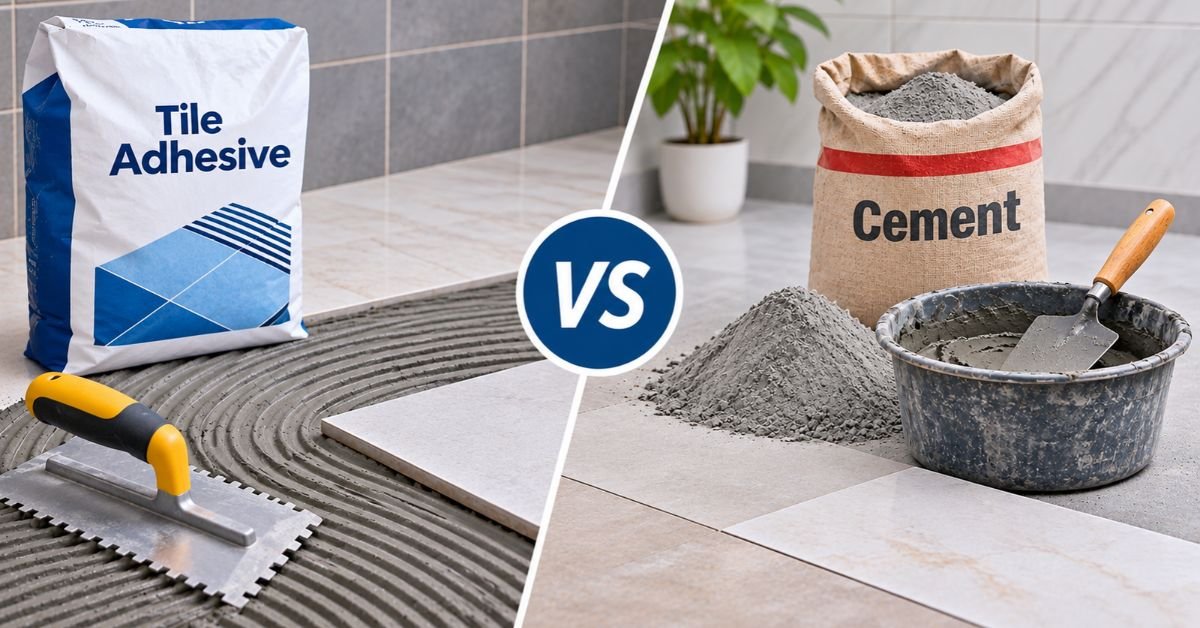
Tile Adhesive vs Cement: Which is better? Choosing the correct bonding agent when installing tiles is an important part. Traditionally tiles are bonded using a cement and sand mix. Tile adhesives have become a popular option due to their strong bond, ease of application and suitability for modern tiles.
Tile Adhesive vs Cement both can be useful depending on the situation. Both products can be useful but depending on the size of tiles, the surface they are being fitted to, where they are being fitted and what you need them for will determine which product to go for.
Let's take a look at the differences and see which would be best for your home.
Tile Adhesive vs Cement — What Are They?
Cement
Cement is used as a fixing agent when fitting tiles. The cement is usually mixed with sand and water to create a mortar bed for the tiles to be stuck to.
Traditional cement mortar has been used for many years, especially when fitting ceramic tiles to floors. It can be tricky to get the mix of cement for tiles right with the correct ratio of cement, sand and water.
Tile Adhesive
Tile adhesive is designed specifically for installing tiles. It can include cement, graded sands, polymers and other agents to help improve the adhesion. The exact formulation will depend on the product.
Ready made tile adhesive doesn’t usually require much more than adding water or a specific liquid agent.
Designed to give a reliable bond it comes in different versions to fit ceramic, porcelain, vitrified and natural stone tiles.
Tile Adhesive vs Cement: Key Differences
| Factor | Tile Adhesive | Cement |
|---|---|---|
| Bonding | Strong, specialised bonding | Depends on the mixture |
| Preparation | Easy to mix and apply | Requires cement, sand and water |
| Flexibility | Available in flexible variants | Generally rigid |
| Application | Thin, even layers | Usually thicker mortar beds |
| Best Suited For | Modern ceramic, vitrified and porcelain tiles | Traditional tile installations |
Tile Adhesive vs Cement: Advantages of Using Them
Though tile adhesives have become a popular option, traditional cement mortar still has a place in construction.
Tile Adhesive
1. Stronger bond
Tile adhesives are designed to provide a strong bond between the tile and base. The formulation improves adherence. Using the correct adhesive and applying it correctly will prevent your tiles from becoming loose.
2. Suitable for various tile types
Many modern homes use large format porcelain tiles, vitrified and other tiles with low porosity. These can be tricky to fit using traditional cement based mortars. There are specific tile adhesives that can be used depending on the type of tile you are fitting.
3. Easy to apply
Most tile adhesives are cement-based and will come as a powder. All you need to do is add the correct amount of water and follow the manufacturer's instructions. You won’t have to work out the ratios of cement and sand.
4. Improved flexibility
Some polymer modified adhesives provide improved flexibility. This allows the adhesive to flex slightly and allow for slight movement within the substrate. This is ideal if the area will experience temperature changes or slight movement.
5. Consistent performance
As the ingredients will be in set amounts when manufacturing the adhesive will provide a more consistent performance than a cement mortar made by hand. It is important that the surface is prepared, mixed and applied correctly.
Cement
1. Wide availability
Cement and sand are easy to access as components.
2. Known technique
Many conventional tilers know how to prepare and apply cement mortar.
3. Applicable for some floors
Cement mortar bed is convenient for thicker bedding or when levelling is needed.
4. Cost factor
For some simple installations, local cement and sand may be cheaper to acquire.
Yet the final installation cost needs to take into consideration the labour, waste, preparation, and possible repairs. Not every tile is suitable for using conventional cement mortar; large format, vitrified, and low absorbency tiles, in particular.
Different Types of Tile Adhesive
Tile adhesives can be very varied, so choosing the correct one is key to ensuring you have a durable installation.
Cement Based Tile Adhesive
One of the most popular types of adhesive is the tile adhesive cement. Contains cement, aggregates and various additives to improve bonding.
There are various grades and versions of cement based tile adhesive for ceramic, vitrified and porcelain tiles.
Polymer Modified Tile Adhesive
These adhesives are the best cement for tiles. They have polymer additives to help increase flexibility, adhesion and overall performance.
Ideal for fixing tiles that may experience slight movement and/or temperature fluctuations.
Epoxy Tile Adhesive
This adhesive uses resin and hardening components to create an extremely chemically resistant product with high bonding strength and low water absorption.
Used commonly within harsh environments including industrial buildings, commercial kitchens and specialist chemical areas.
Ready Mixed Tile Adhesive
This ready mixed paste adhesive is usually provided ready to use.
This is commonly used for specific internal wall tiling applications particularly with ceramic tiles.
However, it won’t be suitable for every type of tile or application especially those that will be exposed to long-term moisture.
Which Is Better for Floor and Wall Tiles?
An incredibly important consideration is what surface you will be using the tile adhesive on.
Floor tiles
As floor tiles have high levels of foot traffic and furniture, you need something which will keep them firmly fixed.
Tile adhesive is generally the go-to option for modern flooring. This is especially true for vitrified, porcelain and large format tiles.
Traditional mortar cement adhesive can be used depending on the tiles you are using. If you are fitting traditional ceramic tiles, which require more bed depth, then you should ensure you follow the tile manufacturer's guidelines.
Wall Tiles
When fitting wall tiles you need to take extra care.
Generally ttile paste adhesive will be the best option. Tile adhesives are designed to be applied with control and provide a strong bond. Choosing the correct tile adhesive can help prevent your tiles from slipping.
Traditional cement mortars can be used in some traditional applications but aren’t the perfect option for modern wall tiles.
Bathrooms & Kitchens
As bathrooms and kitchens are constantly exposed to water, you need to ensure that whatever you use to bond the tiles together will be suitable.
A tile adhesive which is water resistant and has been specified for your application will generally be a good option. But don’t forget tile adhesives won’t waterproof a surface. It is also important that the area below the tiles is properly waterproofed.
FAQs
1. Can tile adhesive replace cement for tile installation?
Yes. Most modern-day tile installations allow the use of tile adhesive instead of cement sand mortar in most cases.
2. Is tile adhesive stronger than cement?
Yes, tile adhesives tend to yield superior adhesion especially in the case of vitrified tiles and porcelain tiles.
3. Can I use cement for vitrified tiles?
No, it’s better to o avoid cement mortar for vitrified tiles because they have low water absorption and difficulty bonding with cement mortar.
4. Is cement-based tile adhesive waterproof?
No. Not all cement-based tile adhesives are waterproof, and some are more resistant than others. For wet areas, you will need waterproofing as well.
5. Can tile adhesive be used for both floor and wall tiles?
Yes. There are many tile adhesives available that can be used on both floors and walls.
Conclusion
Tile adhesive vs cement which tile adhesive is right for your project? The right tile adhesive can help avoid common problems when tiling by providing excellent adhesion and ease of use.
The best option for you will depend on what tiles you are using, the surface you are tiling and the requirements of your project. Although traditional cement mortars are still extremely useful, tile adhesive gives you an easy and specialist product for most flooring/wall tiling jobs.
Before beginning work, read the manufacturer's instructions and choose the bonding product best suited for the application because tile looks beautiful, but it needs a good foundation that will stay like that for a long, long time.
Learn More: Top 10 Mistakes to Avoid When Buying Tiles for Your Home


